

Vinyl lettering
Vinyl lettering is a clean way to add names, unit numbers, trading hours, branding and wayfinding to glass, painted walls and vehicles. We cut lettering to size in our Cape Town workshop and fit across nearby parts of the Western Cape.
What vinyl lettering is
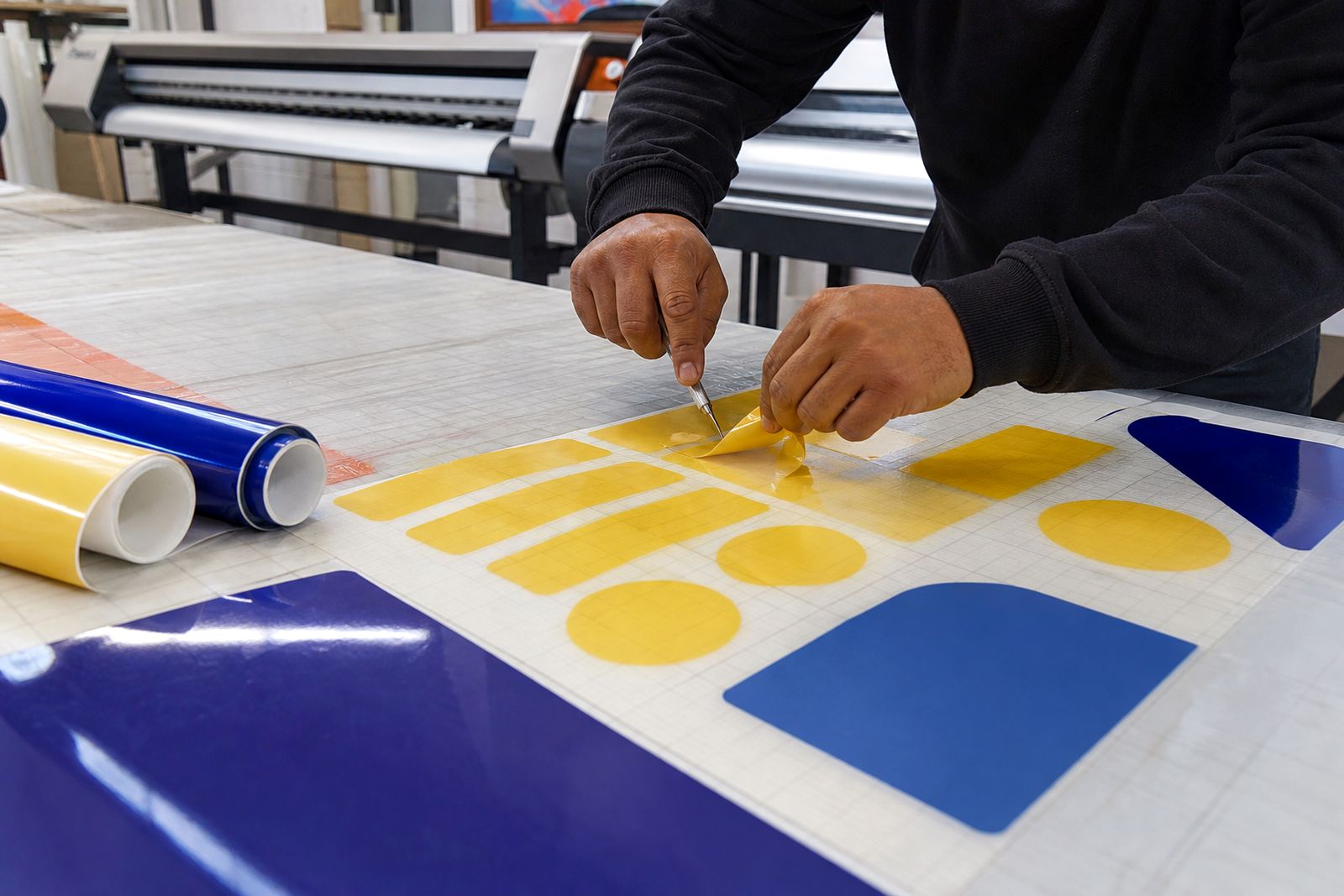
Vinyl lettering is cut from self-adhesive coloured film rather than printed as a full panel. Each letter, number or shape is weeded by hand and lifted with application tape so the layout stays in place during fitting. This gives a tidy result for company names, opening times, directional text, fleet markings, unit numbers and safety wording.
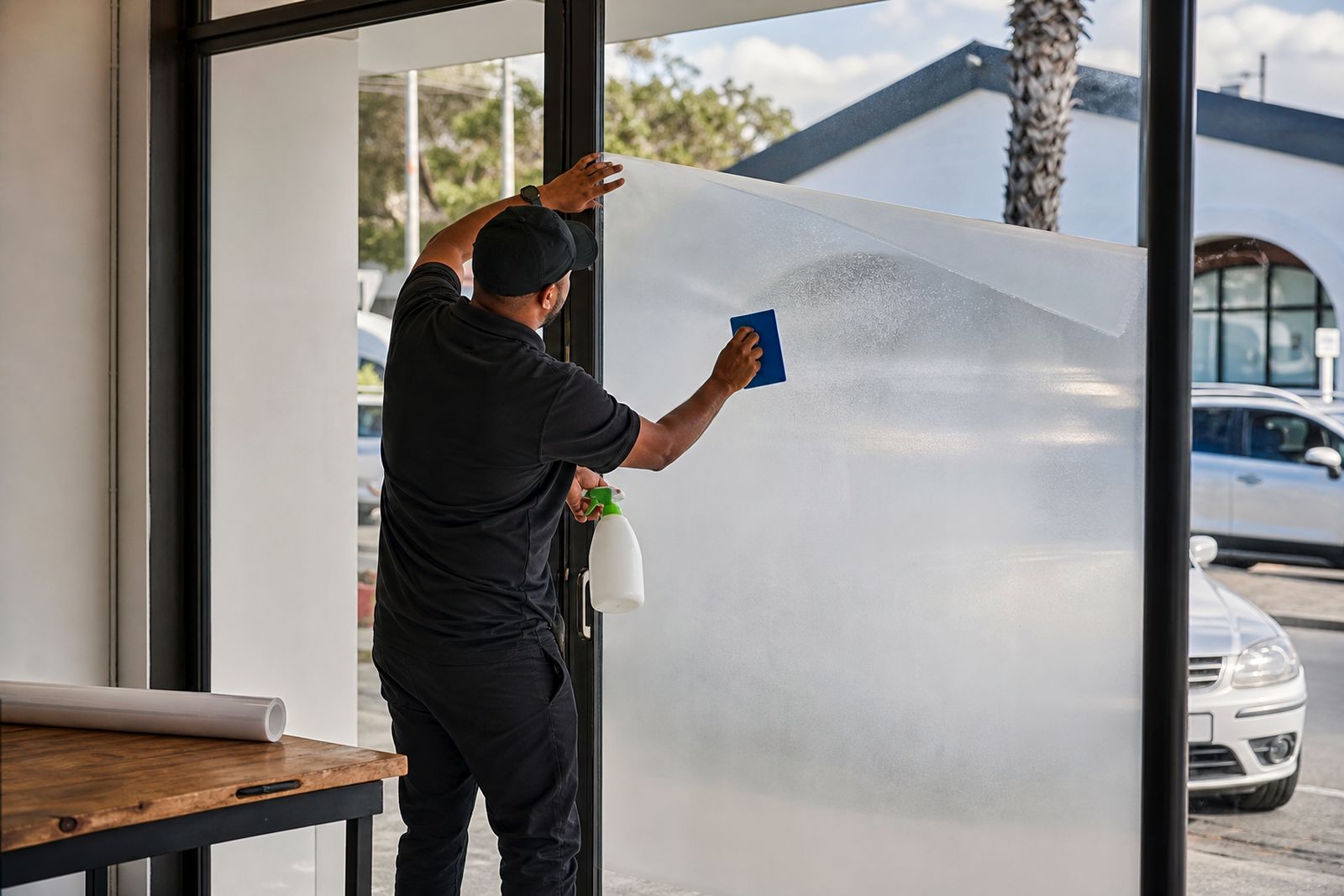
It suits jobs where you want sharp text without a printed background. On windows it keeps a lighter look than a full decal, and on vehicles it works well for door branding, contact details and simple graphics. We can also cut frosted film for privacy bands and meeting room names, which is common in offices and medical rooms around Cape Town.
Sizes, finishes and working limits
We cut lettering in a range of heights and stroke widths, but there are practical limits based on the font, surface and viewing distance. Very small script can lose detail during weeding or lift at the edges over time, especially on vehicles exposed to sun, road grime and coastal humidity. For glass and painted walls, simple fonts with enough stroke width usually last and read better.
- Typical letter height for shop trading hours: 20 mm to 80 mm.
- Common vehicle door text: 40 mm to 200 mm depending on reading distance.
- Reception and wall names: often 50 mm to 300 mm.
- Smallest practical cut detail: about 8 mm to 10 mm high for plain block text, subject to font choice.
- Available finishes generally include gloss, matt and frosted effect, with a range of standard colours.
Large wording can be tiled in sections for easier transport and fitting. Fine outlines, distressed artwork and tightly spaced letters are possible in some cases but need checking first. If the job needs gradients, photos or complex colour blends, printed vinyl is usually the better route.
Where it works best and where it does not
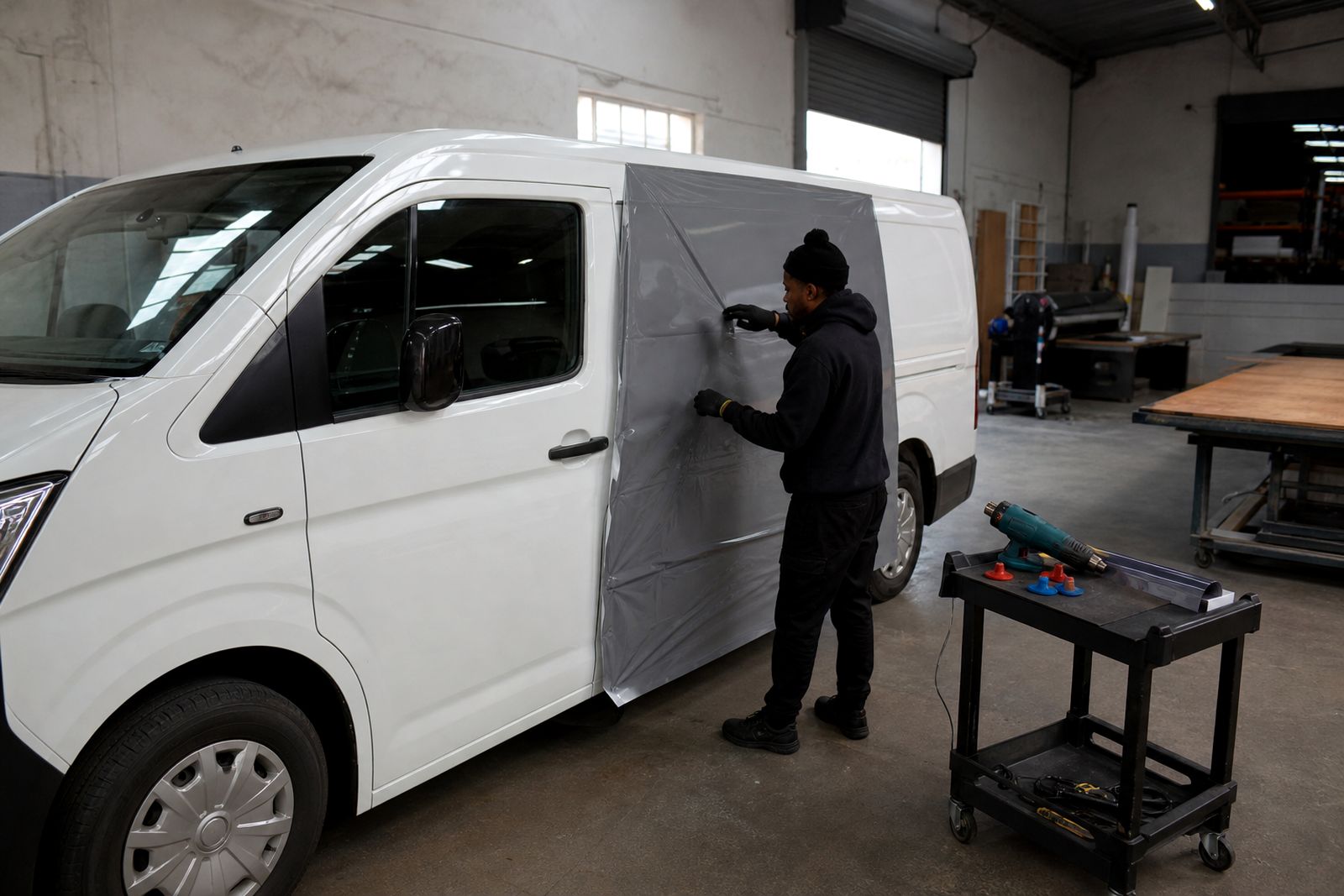
Vinyl lettering is a good choice for flat glass, smooth painted metal, sealed boards, interior walls with a sound paint finish, and vehicle panels that are in decent condition. It is widely used on shopfront windows, office partitions, bakkie doors, vans, trailers, reception walls and warehouse bay numbers. For repeat fleet work, we can keep artwork on file so additional vehicles match the first one.
- Best for business names, unit numbers, arrows, safety text and simple branding.
- Useful on windows where you still want light through the glass.
- Suitable for short turnaround event labels and temporary promotions.
- Works well on smooth sign boards where only wording is needed.
It is less suitable for rough brick, heavily textured plaster, chalky paint, flaking coatings, unsealed timber or badly curved vehicle recesses. On these surfaces the adhesive may not bond evenly and small characters can fail early. If a surface is old or uncertain, we may suggest a site check or a sample test first, which saves rework later.
Site and installation requirements
A clean, dry surface is the main requirement. Glass must be free of silicone residue, dust and old adhesive. Vehicle panels should be washed before arrival and free of polish or wax where lettering will be applied. Fresh paint needs proper curing time before fitting. If a vehicle has dents, rust bubbles or stone-chip damage in the branding area, the finish can show through and shorten the life of the job.
For on-site fitting we need enough access space, especially for long window runs and fleet vehicles parked side by side. Indoor fitting is preferable in wet or windy weather. In winter months around the Cape, condensation on glass can slow down installation a bit and we may need to wait for the surface to stabilise.
- Tell us whether the lettering is going on the inside or outside of the glass.
- Confirm if the surface is flat, curved or recessed.
- Advise if there are municipal or body corporate rules for shopfront graphics.
- Let us know if parking clearance, permits or site induction is needed.
Care, cleaning and expected service life
Once fitted, vinyl lettering should be left undisturbed for a short settling period before heavy cleaning. On windows and vehicles, wash with mild soapy water and a soft cloth or sponge. Avoid harsh solvents, abrasive pads and high-pressure spray aimed directly at letter edges. Those can cause lifting, especially on smaller text.
Outdoor life depends on exposure, colour choice, surface condition and how the item is cleaned. Vehicles that stand in full sun all day or travel long distances on gravel routes will naturally age faster than interior glass or office walls. In coastal areas such as Cape Town, salt in the air can add wear over time, so regular gentle cleaning helps. If one panel is damaged, matching replacements are usually straightforward if the original artwork is on file.
What to send with your enquiry
The best way to quote and plan vinyl lettering is to receive the basic site and artwork details up front. If you already have a logo or previous layout, send the file through the enquiry form on our contact page together with the size of the area. If not, the wording you need and the size of the area are enough to start.
- What the lettering must say, including spelling, punctuation and language.
- Approximate size in millimetres and the surface it goes on.
- Surface type, such as glass, painted wall, aluminium panel or vehicle door.
- Colour choice and whether you want gloss, matt or frosted effect.
- Your site area in Cape Town or the nearby Western Cape.
- Whether supply only or supply and fit is required.
- Any deadline tied to an opening date, event or fleet rollout.
If the job is for several branches, vehicles or offices, note the quantities and any differences between sites. That helps us plan production properly and avoid delays, and it keeps repeat work consistent across your signage set.
What our Signage customers say
Verified Google reviews
Questions we get asked
Can vinyl lettering be applied inside glass facing out?
Yes, for some shopfronts and office windows we can reverse-cut the lettering for inside application. This helps protect it from weather and cleaning, but it is not the right option for every colour or visibility requirement.
Will vinyl lettering damage paint when removed?
On sound, properly cured paint it can often be removed with manageable adhesive cleanup. If paint is old, chalky or poorly bonded, removal may lift the coating, so we advise caution on older walls and repaired vehicle panels.
Is cut vinyl better than printed vinyl for simple branding?
For plain text and solid colour logos, cut vinyl is often cleaner and more economical than a full printed panel. If the artwork includes photos, fades or many colours, printed vinyl is usually the better fit.
Ask for a quote
Send the sign type, approximate size, quantity, site and timing through the contact form, and S Signs will reply with practical options and a quote.
Open the contact form