

Billboards and metal sign boards
S Signs supplies large roadside panels and mounted sheet boards for businesses, developments, contractors and property marketing in Cape Town and nearby parts of the Western Cape. We handle print, fabrication and fitting, with practical advice on size, structure, weather exposure and site access before the job goes ahead.
What billboards and metal sign boards are used for
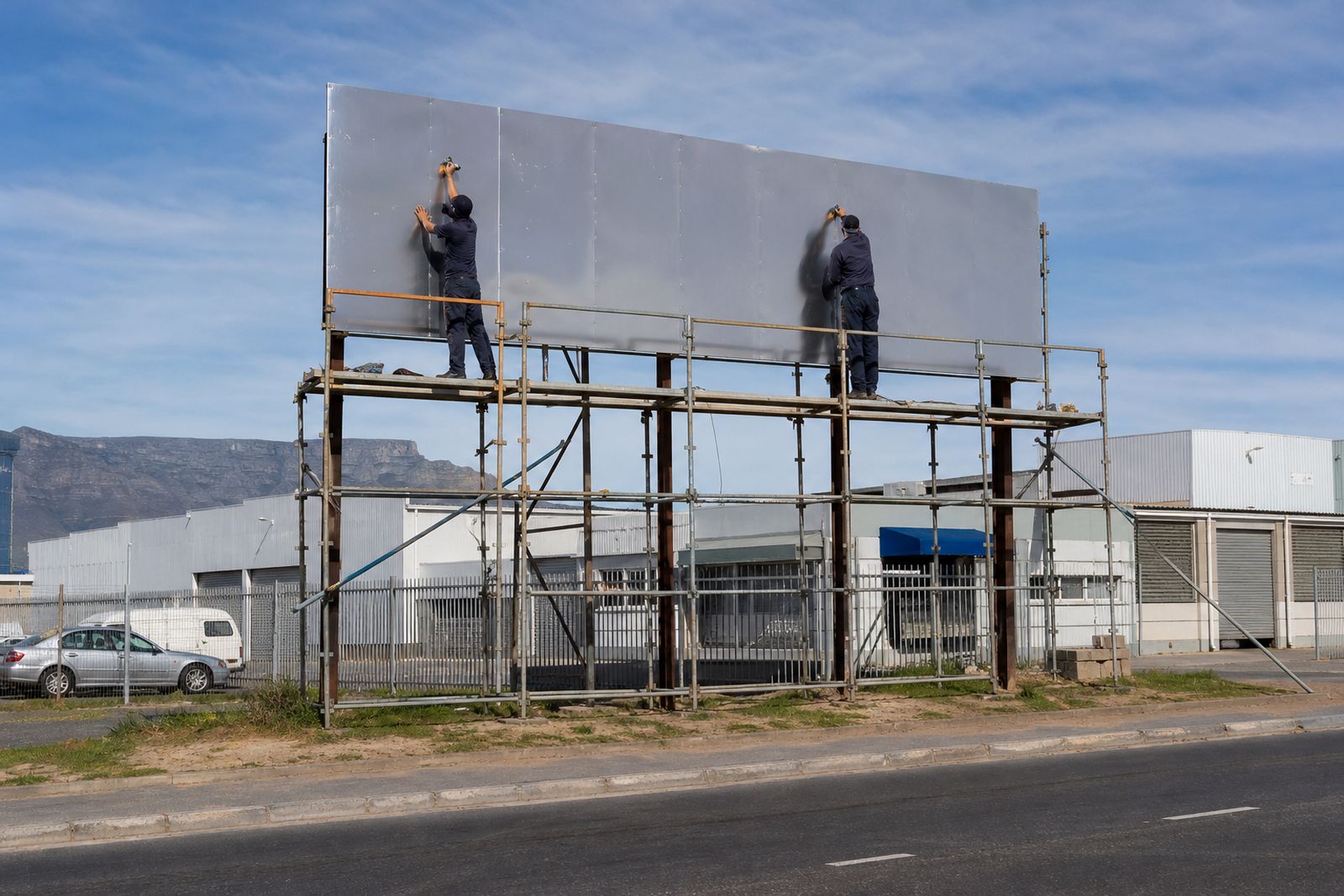
These signs are built for outdoor visibility where a normal wall sign is too small or too close to the building. Billboards are large display panels fixed to a freestanding frame, boundary structure or existing support, while metal sign boards are sheet panels mounted to poles, fences, gates, walls or purpose made frames. They are common on main roads, industrial sites, retail plots, vacant land, building perimeters and event grounds.
In the Cape Town area they are often used where wind, sun and coastal air can damage lighter materials. A metal board gives a more rigid face, and a billboard structure allows larger copy and graphics to be read from passing traffic. We can produce single boards or repeated sets for multi-site rollouts, and artwork can be kept on file for reprints or replacement panels.
- Roadside advertising panels
- Development and site marketing boards
- Factory and depot identification signs
- Directional boards for estates, schools and venues
- Perimeter branding on fences and boundaries
- Long term information boards for public facing sites
Sizes, materials and practical limits
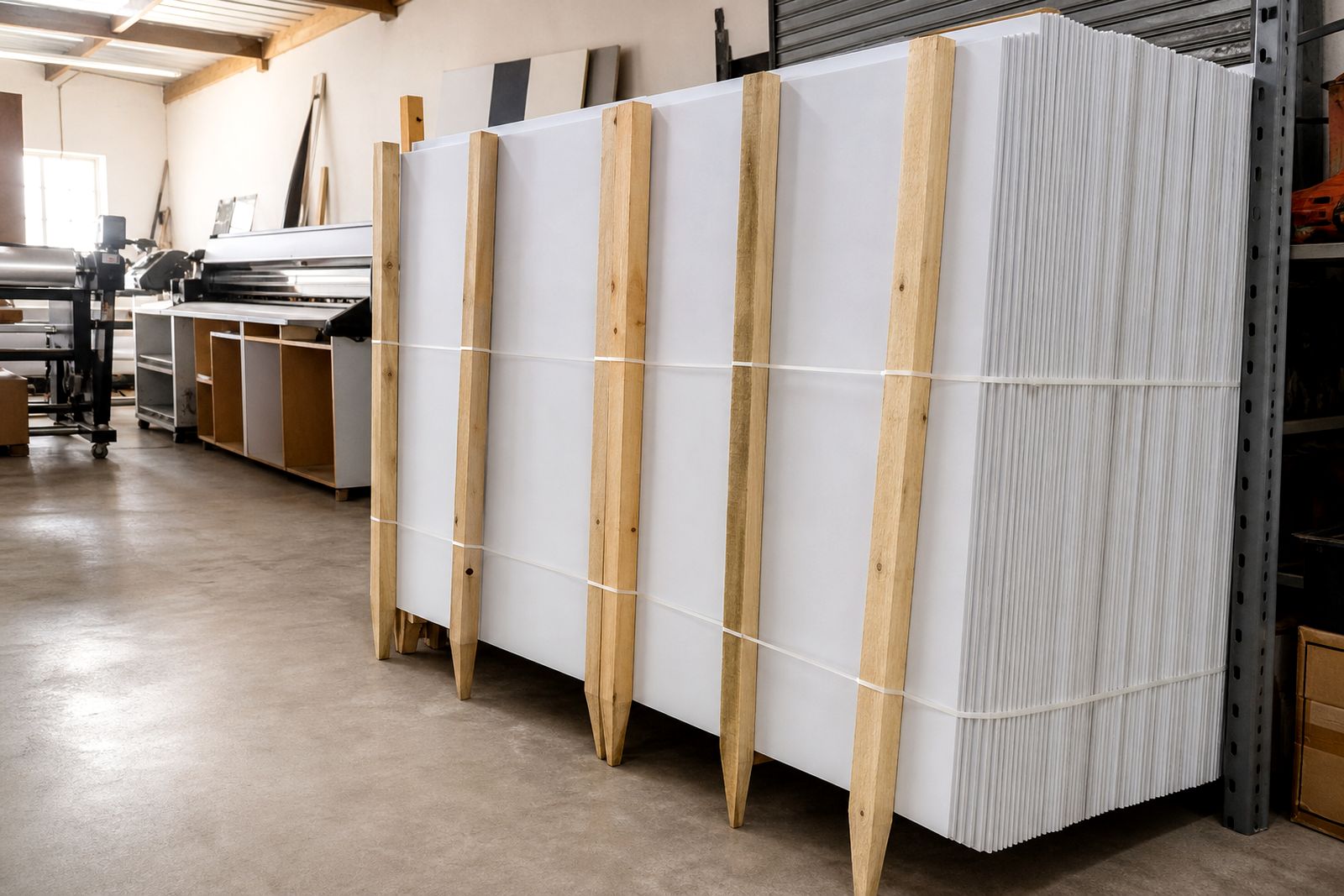
We make boards to suit the available structure and the viewing distance, rather than forcing one standard size onto every site. Smaller metal boards are often used from about 600 x 900 mm upward, while roadside boards can run to several metres wide and high where the support frame and approvals allow it. Common face materials include galvanised sheet, aluminium composite type panels, folded aluminium sheet and other rigid exterior panels chosen for the span and fixing method.
Working limits matter. Very large unsupported sheet panels can flex in wind, and oversized artwork with too much detail will not read well from the road. On exposed corners and coastal sites, panel joins, return edges and fixing centres need more care than they would inland. We will advise when a job needs a heavier frame, more fixings or a split panel build for transport and installation.
- Best for short, bold messages and clear logos
- Long paragraphs and fine print do not work well at traffic speed
- Large panels may need sectioned manufacture for delivery access
- High wind areas can limit overall panel size without extra steelwork
- Salt air near the coast may affect material choice and finish
Where these signs suit, and where they do not
Billboards and metal sign boards suit places where people need to see the message from a distance, from a moving vehicle or across an open site. They work well for arterial roads, approach roads to business parks, open erven, perimeter walls, fuel and service sites, contractor compounds and large parking areas. They are also useful where a temporary banner would flap, sag or wear too quickly.
They are not always the right answer for every location. If the sign will be read up close by foot traffic, a fabricated sign, window graphic or directory board may be more practical. If the wall surface is weak, cracked or rented with restrictions on drilling, another fixing method may be needed. Some sites also have planning rules on overall height, illumination, setback from the road and sightline interference, so it helps to check early rather than once fabrication has started.
Printing, finishes and structure options
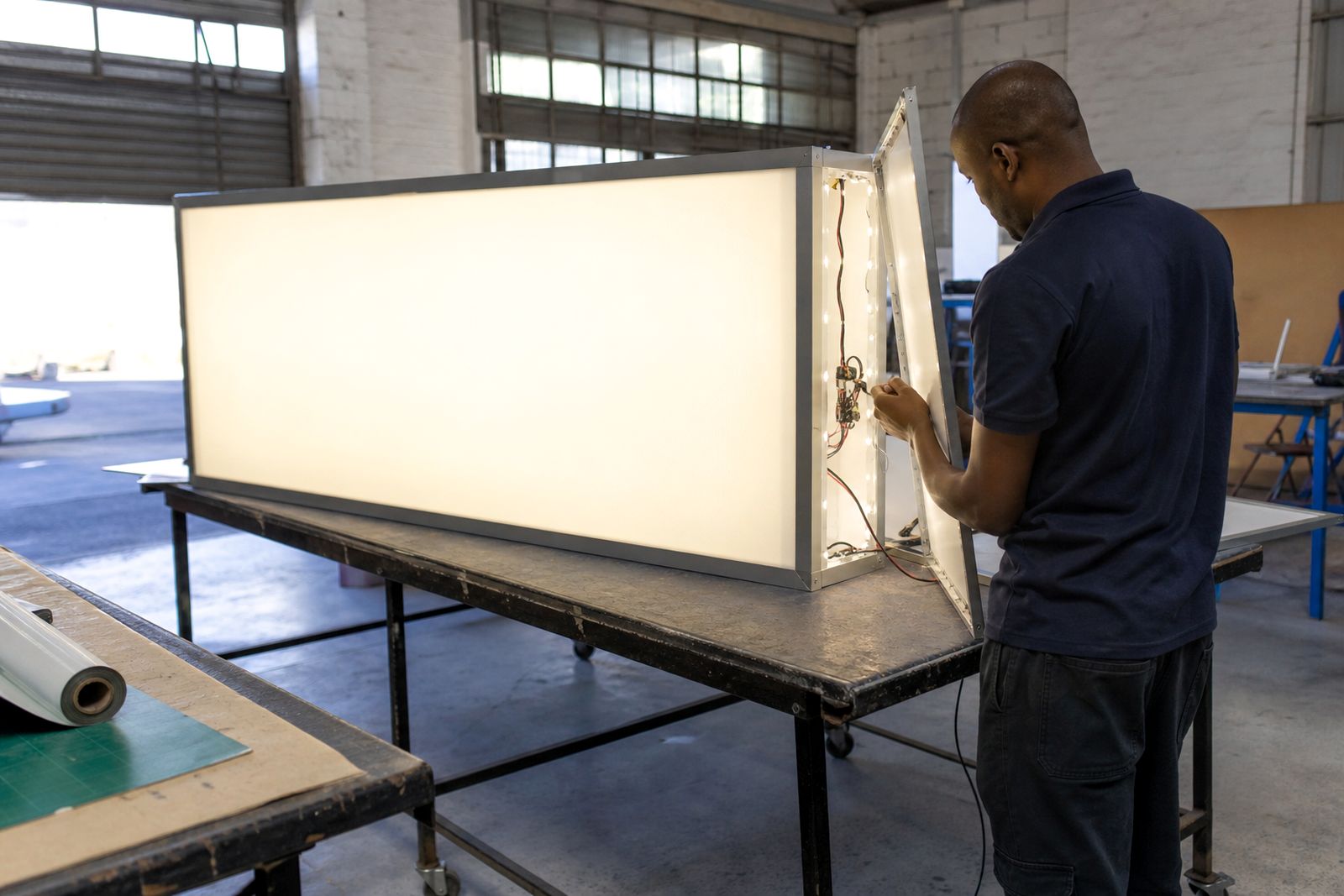
The graphic face can be produced in direct print or on high tack exterior vinyl applied to the panel, depending on the material, expected life and replacement plan. For many outdoor jobs we recommend UV coated print where colour retention and easier cleaning are important. Metal boards can be plain faced, framed, folded at the edges for stiffness, or mounted onto a steel support system where extra span strength is needed.
For billboard style installations, we can supply face panels prepared for fixing to an existing frame, or a complete fabricated assembly where the site allows. If your campaign changes regularly, it can make sense to keep the support structure and replace only the face panels. That usually cuts downtime on site and keeps repeat orders simple.
- Direct printed rigid panels for clean, flat presentation
- Printed vinyl applied to metal or rigid board faces
- UV coated finishes for added outdoor protection
- Folded returns and bracing for larger sheet boards
- Freestanding or wall mounted support arrangements
Installation and site requirements
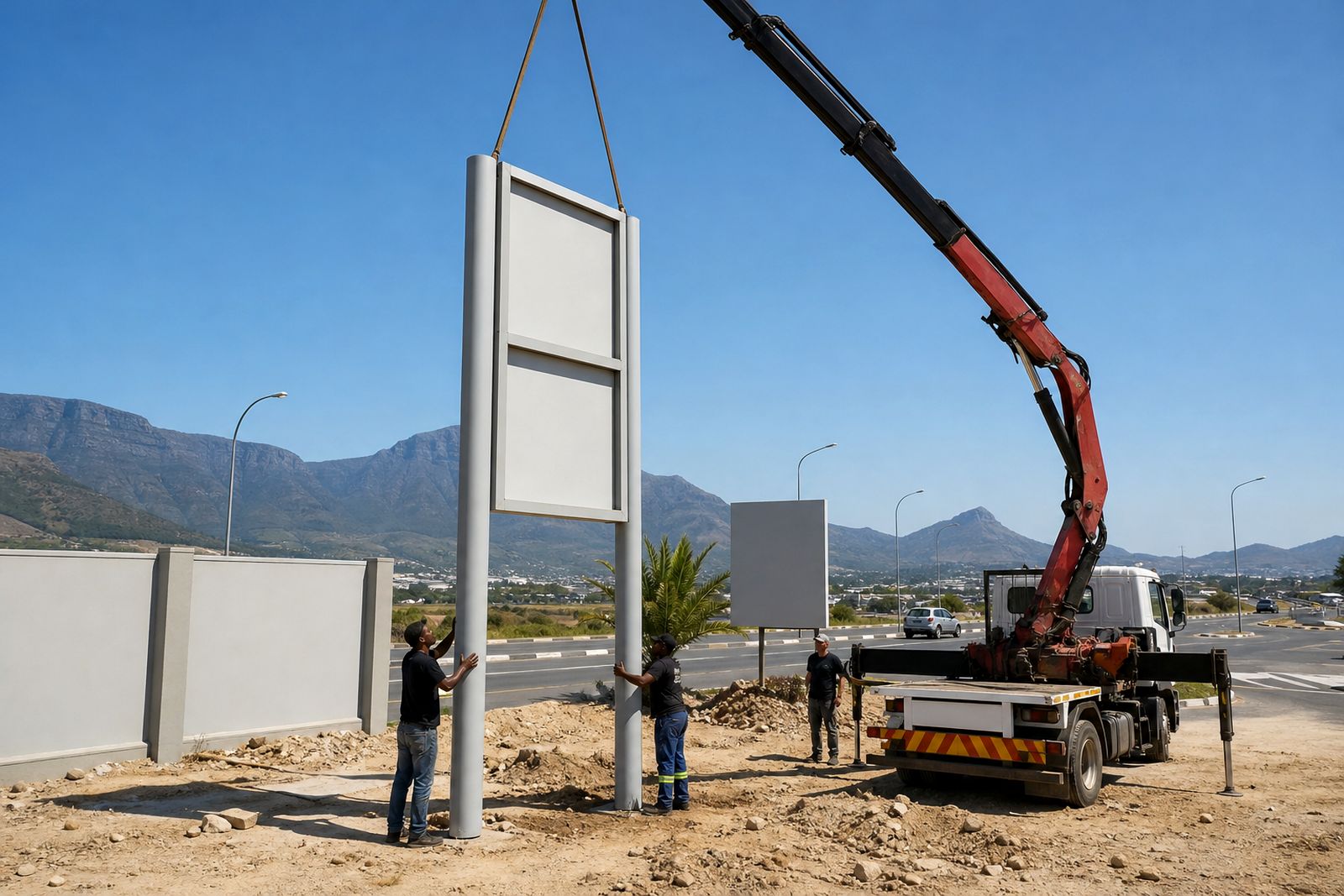
Before fitting, we need to know how the sign will be supported, how installers will reach the area and whether traffic control, lane access or special timing is required. Large roadside boards often need safe access for lifting equipment, especially if the panel is mounted above boundary height. On active sites we also check for underground services, existing foundations and overhead lines before posts or anchors are set out.
Municipal approval or landlord approval may be needed, particularly for prominent roadside signs, pylon related boards or structures close to public roads. The customer is usually best placed to confirm permissions for the property, but we can work from approved sizes and site rules once these are available. If a board is being fixed onto an existing frame, the frame size and a few measurements usually save a second trip and speed things up a bit.
- Where the board stands and how far away people see it
- Overall panel size required
- Wall, fence, frame or pole mounting detail
- Access limits for ladders, lifts or trucks
- Any approval conditions from the property or municipality
- Target date for installation
Care, lifespan and what to send when you enquire
Outdoor boards last longer when they are cleaned lightly and checked after strong weather. Dust, road film and bird droppings should be washed off with mild soap and water rather than harsh solvent. It is also worth checking fixings, edge seals and frame rust spots from time to time, especially in damp winter conditions and in areas closer to the sea. If a panel is struck, bent or vandalised we can usually replace the face without remaking the whole setup.
When you send an enquiry through our contact page, include the intended location, the approximate viewing distance, the message to be shown and whether you need a new structure or only a replacement face. Artwork files are helpful if you have them, but a rough layout or the wording and size of the current sign can be enough to start. Let us know if this is a once-off board or part of a repeat programme, and whether matching signs are needed at other Western Cape sites. That makes planning quicker and avoids back and forth.
What our Signage customers say
Verified Google reviews
Questions we get asked
Can you replace the face on an existing roadside frame?
Yes, if the frame is sound and the size is confirmed we can produce replacement panels or printed faces to suit the existing structure.
Do I need approval for a billboard or large roadside board?
In many cases yes. Approval depends on the property, the road, the height and the type of sign, so it is best to confirm this before manufacture.
What artwork works best on a large outdoor board?
Short wording, strong contrast and large lettering work best. Fine detail and long blocks of text are hard to read from moving traffic.
Also worth a look
Ask for a quote
Send the sign type, approximate size, quantity, site and timing through the contact form, and S Signs will reply with practical options and a quote.
Open the contact form