

Construction, contractor and pylon signs
We make site boards, contractor signs and pylon signs for businesses that need clear identification on active sites, business parks and roadside positions. Our Cape Town workshop handles print, fabrication and fitting, with practical advice on size, structure and weather exposure.
What these signs are used for
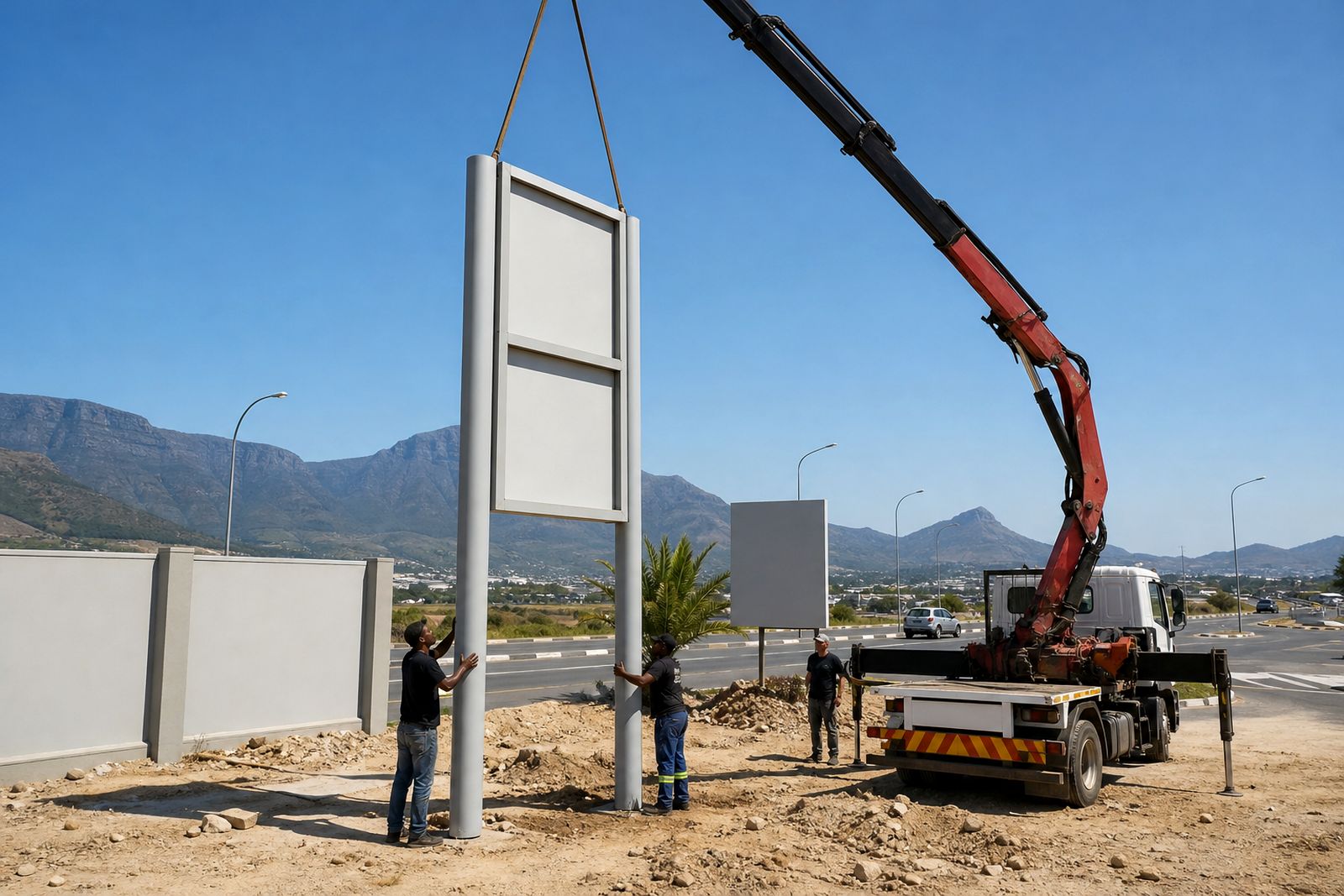
Construction and contractor signs are the boards you see at building sites, access gates, perimeter fencing and development entrances. They identify the main contractor, subcontractors, consultants, safety contacts, sales teams or the project name, and they help visitors, inspectors and delivery drivers find the right entrance without confusion. Pylon signs are freestanding vertical signs used at office parks, retail sites, forecourts, industrial properties and larger developments where branding must be visible from a distance.
These products suit businesses that need straightforward information outdoors for weeks, months or longer. We produce single boards for once-off jobs as well as multi-panel systems where tenant names or contractor details may change later. Artwork can be kept on file for repeat orders, site phases or additional branches, which helps when a fleet, development or chain needs matching signage across different locations.
- Construction boards for site entrances, hoardings and fencing
- Contractor boards with project names, logos and contact details
- Pylon signs for shared business parks, retail entrances and roadside visibility
- Directional panels for visitors, deliveries and staff parking
Common sizes, materials and working limits
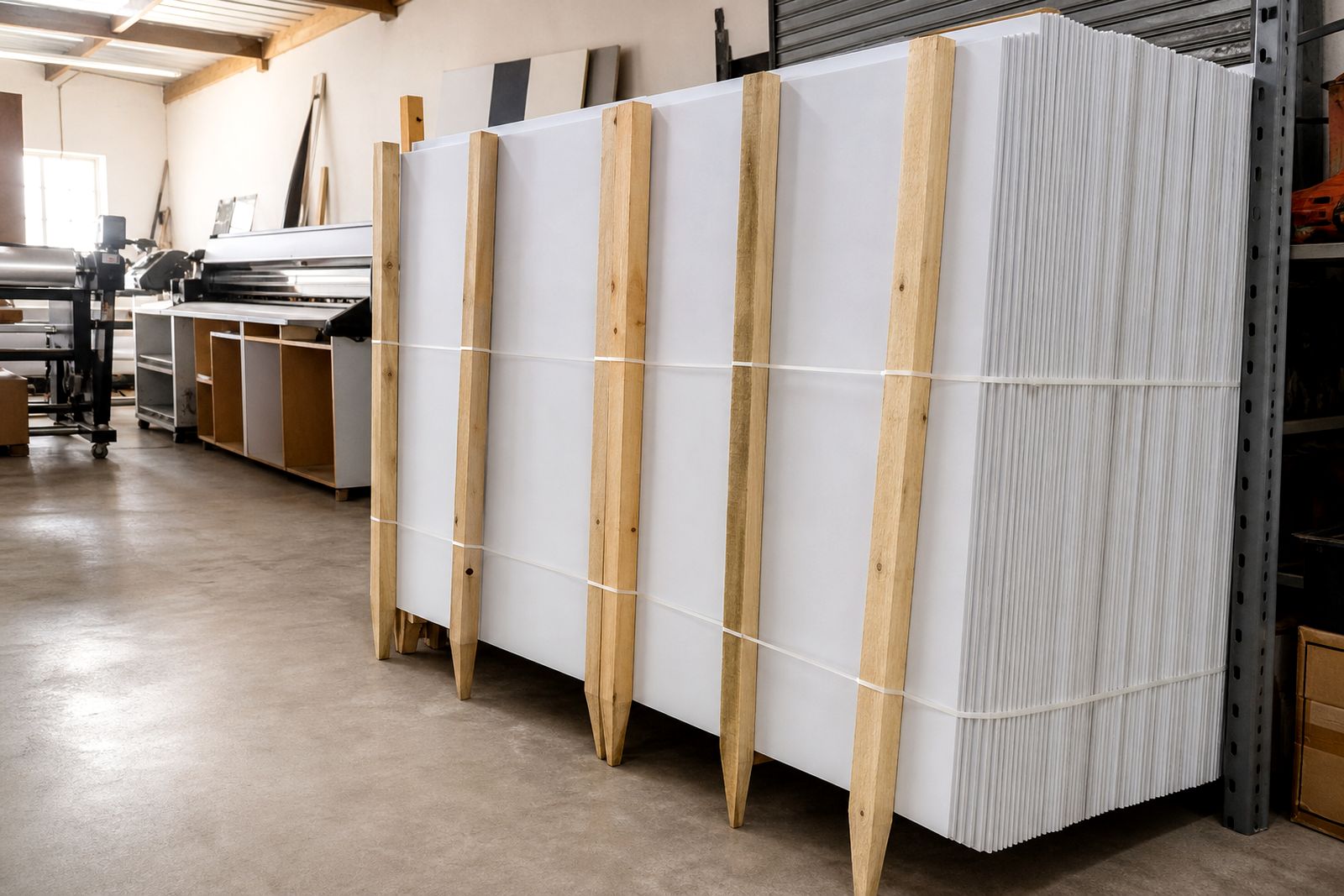
For temporary and mid-term site use, boards are usually made on rigid printed panels fixed to poles, fences or frames. Common board sizes include 1 200 x 900 mm, 2 400 x 1 200 mm and 3 000 x 1 500 mm, depending on reading distance and available fixing points. For pylon signs, overall height and width vary far more because each site has different sightlines, setback rules and structural needs. Smaller pylons may suit an office entrance, while larger units are used where traffic speed and distance demand bigger lettering.
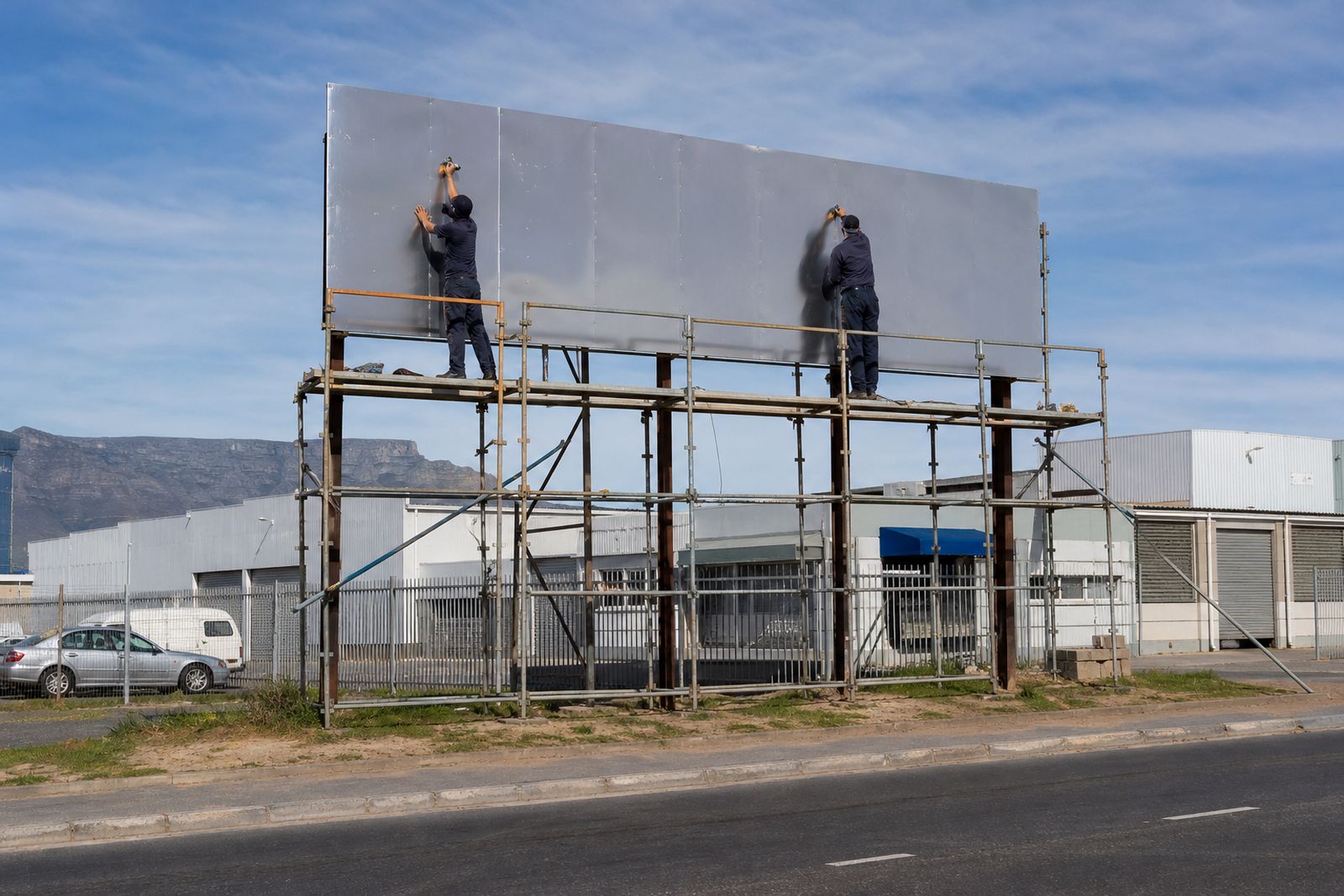
Material choice matters. Printed rigid boards work well for contractor information and short to medium site programmes. Aluminium composite type panels suit neater long-term exterior use and hold up well in coastal conditions. Steel frames and fabricated sign boxes are used where extra strength is needed. Very large unsupported panels can flex in strong Cape winds, so span, bracing and pole spacing must be planned properly not guessed on site.
- Temporary boards: practical for short contracts, launches and developments under way
- Longer-term exterior panels: better for repeated weather exposure and cleaner presentation
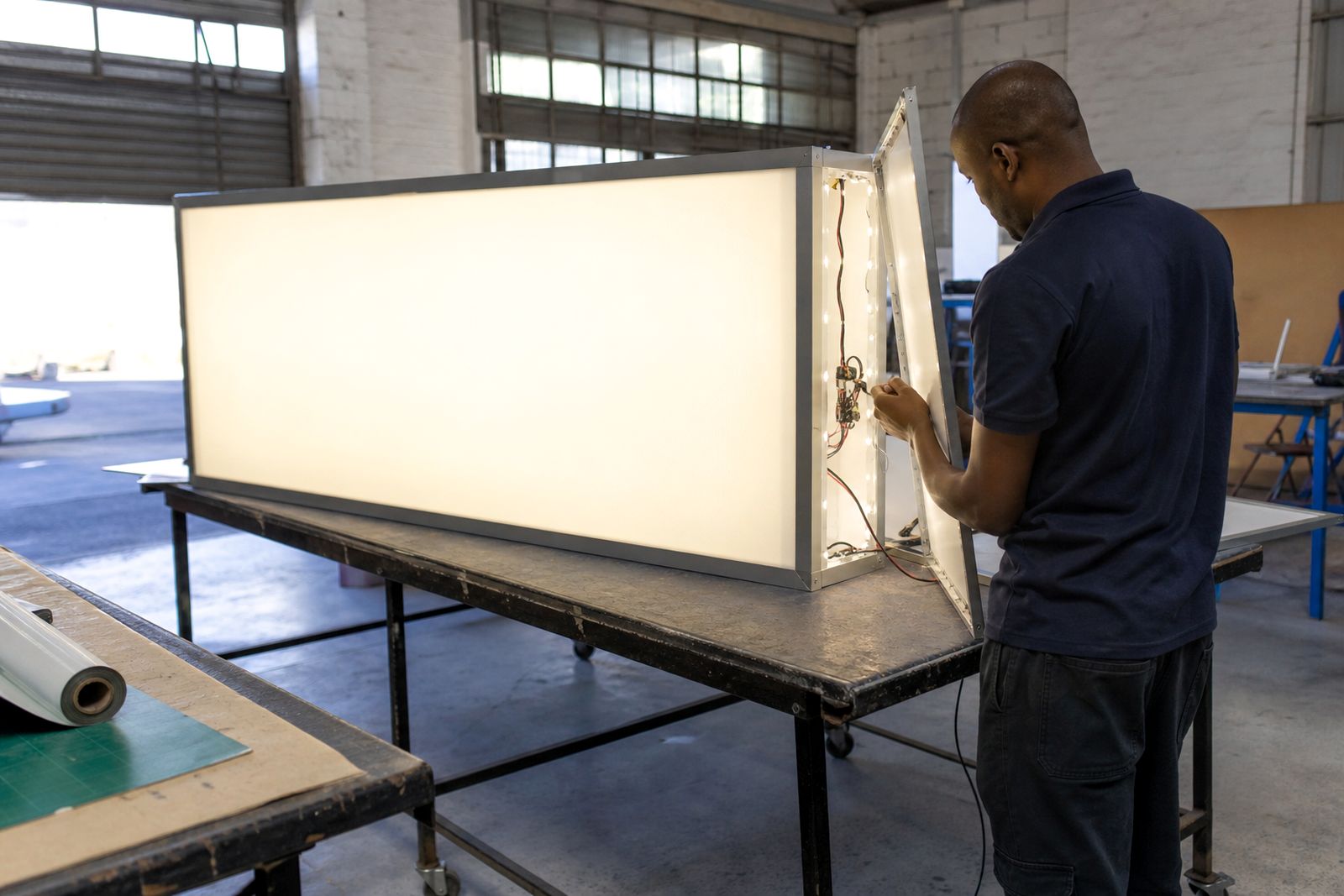
- Pylons: can be single-face or double-face, with changeable tenant panels if required
- Illumination: optional on suitable pylon structures where power and approvals are in place
These signs are not ideal where there is no secure fixing point, where underground services prevent proper foundations, or where a landlord or municipality limits sign height. In those cases we can advise on alternative wall mounted or lower-profile options.
Where they suit and where they do not
Contractor and construction boards suit active sites in Cape Town and nearby parts of the Western Cape where the public, suppliers and compliance teams need clear information. They also work well for new developments, roadworks, warehouse upgrades, schools under alteration and commercial fit-outs where multiple parties must be named. Pylon signs suit entrances that are easy to miss, properties set back from the road, and multi-tenant sites that need a tidy, central sign rather than several small boards spread around the entrance.
They are less suitable in very cramped pavements, small shopfronts or temporary event spaces where a banner, wall sign or A-frame makes more sense. A pylon sign is also not the best option where a line of trees, parked trucks or boundary walls will block most of the view. In some coastal positions salt air and constant wind can shorten the life of lower-grade finishes, so we specify materials with exposure in mind.
If the sign must be read by passing traffic, the lettering and layout need to stay simple. Overloaded artwork with too many names, phone lines and logos quickly becomes unreadable at speed, and then the board stops doing its job.
Site requirements and installation planning
Before production we need to know where the sign will stand, how it will be fixed and what access is available for installation. A contractor board on fencing is very different from a freestanding steel-framed sign in compacted ground, and both differ again from a pylon at a formal business park entrance. On larger pylons, foundations, steelwork, lifting access and municipal or landlord approval may all affect the programme.
In winter rain and summer wind around the Cape, proper fixing is not optional. We check exposure, pole depth, frame size, substrate thickness and the likely wind load on broad panels. If there are power cuts or restricted site hours, installation timing should be discussed early so lifts, drilling and lighting checks can be planned around access windows.
- Tell us whether the sign mounts to a wall, fence, poles or a new frame
- Confirm if there are underground services near the intended position
- Advise on access for ladders, scaffold, cherry picker or truck
- Check whether landlord, estate or municipal approval is required
- For illuminated pylons, note the nearest power supply point
Care, lifespan and replacement panels
A contractor board does not need complicated maintenance, but it should be checked after heavy wind, site changes or impact from vehicles and plant. Dirt, cement splash and road grime can usually be cleaned with mild soap and water. Strong solvents and abrasive pads should be avoided on printed surfaces because they can mark the laminate or lift the print edge.
Pylon signs need more regular checks, especially where panels are high up or illuminated. Fasteners, doors, internal supports and drainage points should be inspected from time to time. Near the coast, washing salt residue off exposed surfaces helps maintain appearance and slows staining. If a tenant changes or a contractor panel needs updating, we can often remake only the affected face or insert rather than replacing the full structure, which keeps changeovers simpler.
Keeping original artwork on file also helps when an estate adds another entrance board or a contractor needs matching signs for the next phase. It saves time and keeps branding consistent across multiple sites.
What to send when you ask for a quote
The best way to get an accurate quote is to send the intended sign type, approximate size, installation town and whether it goes on posts, a frame or a wall. If you have a drawing pack, site plan or landlord sign criteria, include that from the start. For pylon signs, the more detail we have on height limits, setback lines and tenant panel requirements, the better.
Please also tell us what the sign must achieve. A board read from five metres away can be much smaller than one meant for traffic approaching from across a dual carriageway. If branding is already approved, send print-ready artwork. If not, we can work from a logo file, wording list and simple layout notes.
- Site address or suburb in Cape Town or the Western Cape
- Approximate size required or reading distance
- Single board, multi-panel board or full pylon structure
- Wall, fence, pole, frame or foundation mounting
- Whether the sign is temporary, medium-term or permanent
- Any deadline linked to opening day, handover or compliance inspection
Use the enquiry form on our contact page and attach whatever you have. We will advise on suitable materials, likely fixing methods and the practical next step.
What our Signage customers say
Verified Google reviews
Questions we get asked
Can you install a pylon sign on any site?
Not always. The site needs enough space, suitable ground or foundation conditions, safe access for installation and any required landlord or municipal approval.
How long do contractor boards last outdoors?
That depends on the material, fixing method and exposure. Temporary boards suit shorter projects, while stronger panel systems and framed signs are better for longer exterior use.
Can tenant names or contractor details be changed later?
Yes, in many cases we can replace only the printed panel or changeable insert instead of remaking the full sign, which is often more practical.
Also worth a look
Ask for a quote
Send the sign type, approximate size, quantity, site and timing through the contact form, and S Signs will reply with practical options and a quote.
Open the contact form