Illuminated light boxes
Illuminated light boxes help a business stay visible after dark and on overcast winter days. We fabricate and fit practical illuminated signs in Cape Town and nearby Western Cape areas for shopfronts, offices, sites and roadside positions.
What an illuminated light box is
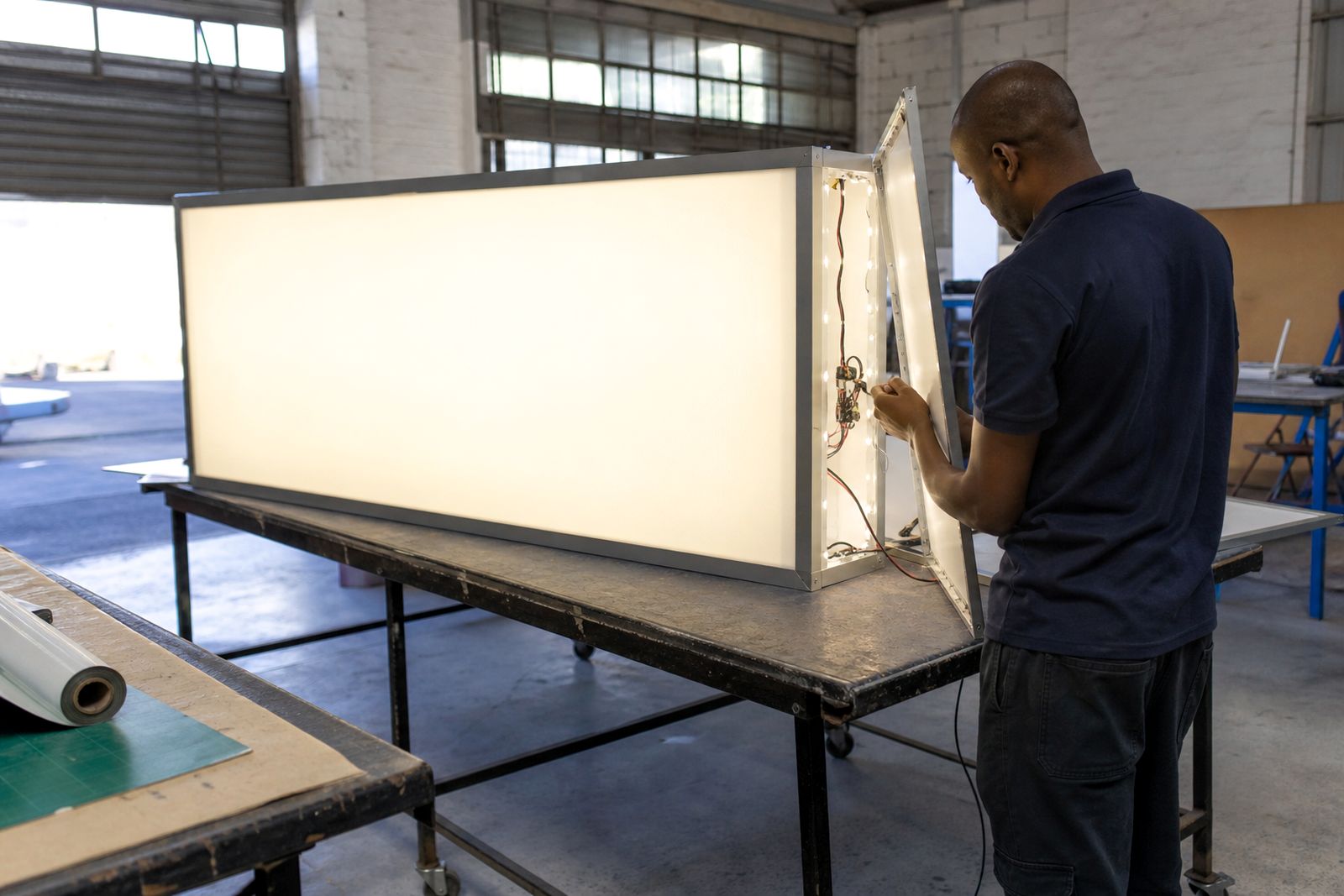
An illuminated light box is a sign cabinet with internal lighting and a printed or cut face that stays readable in low light. It is commonly used for retail shopfronts, office entrances, reception areas, industrial units and roadside branding where a plain sign can disappear at dusk.
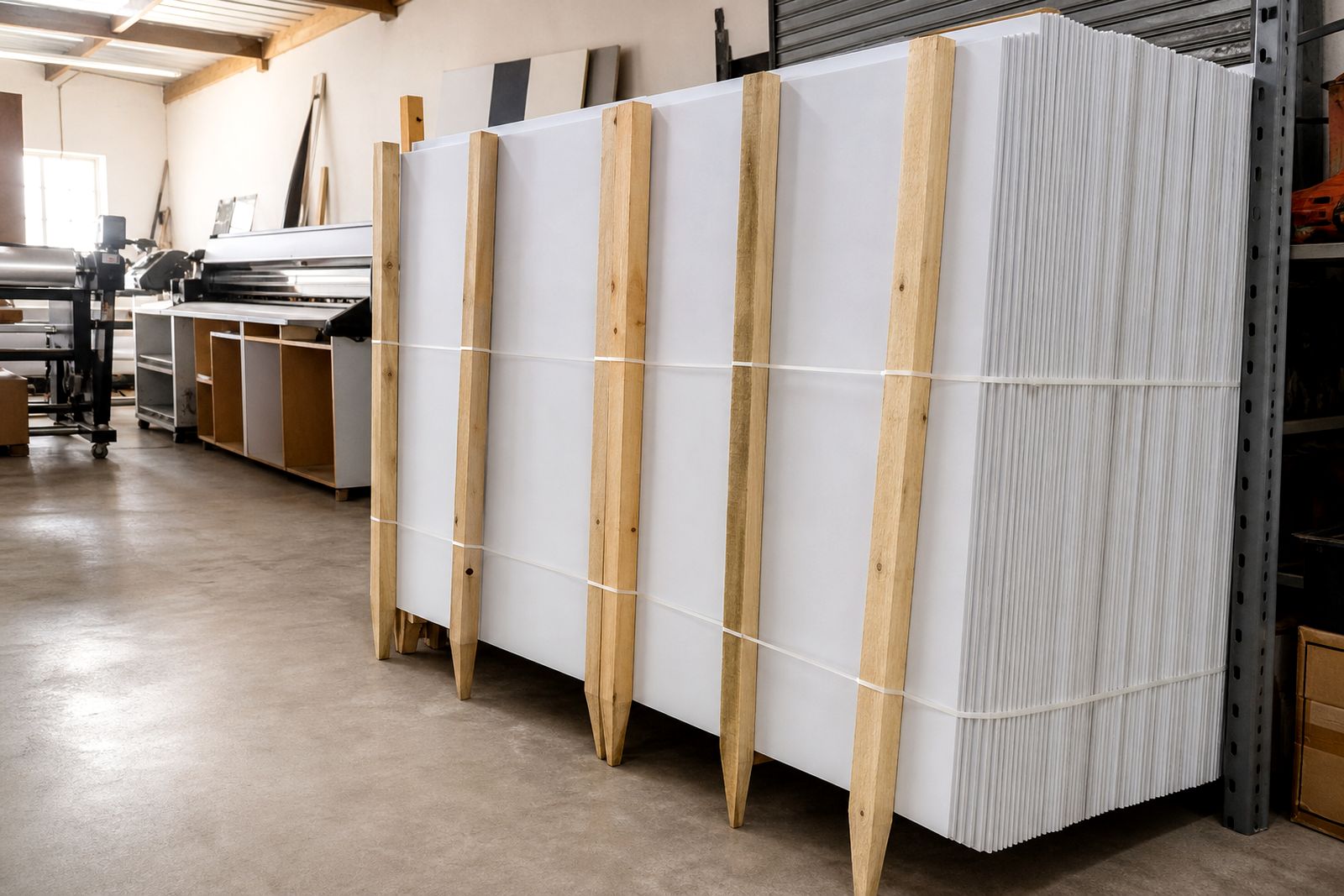
Our workshop makes light boxes in standard rectangular formats and custom shapes, depending on the wall area, fixing point and viewing distance. Faces are usually made from acrylic or similar sign-grade sheet, with graphics applied in vinyl or print. Frames are typically aluminium or steel, selected to suit the sign size and the site conditions near the coast where salt air and wind need to be allowed for.
For repeat branches or fleet depots, artwork can be kept on file so matching signs are easier to reorder later.
Common sizes, formats and working limits
The right size depends on how far away the sign must be read from, whether it sits flat against a wall or projects outward, and how much structure is available for fixing. Small wall boxes can work above a door or in a passage, while larger fascia units are better for street facing premises.
- Small indoor or sheltered boxes: roughly 600 mm x 300 mm up to 1 200 mm x 600 mm.
- Typical shopfront fascia boxes: around 1 500 mm x 600 mm up to 3 000 mm x 1 200 mm.
- Projecting double-sided boxes: often 600 mm x 600 mm to 1 200 mm x 1 200 mm, depending on bracket strength and municipal clearance.
- Deep profile boxes: useful where stronger visibility is needed from an angle or at a greater distance.
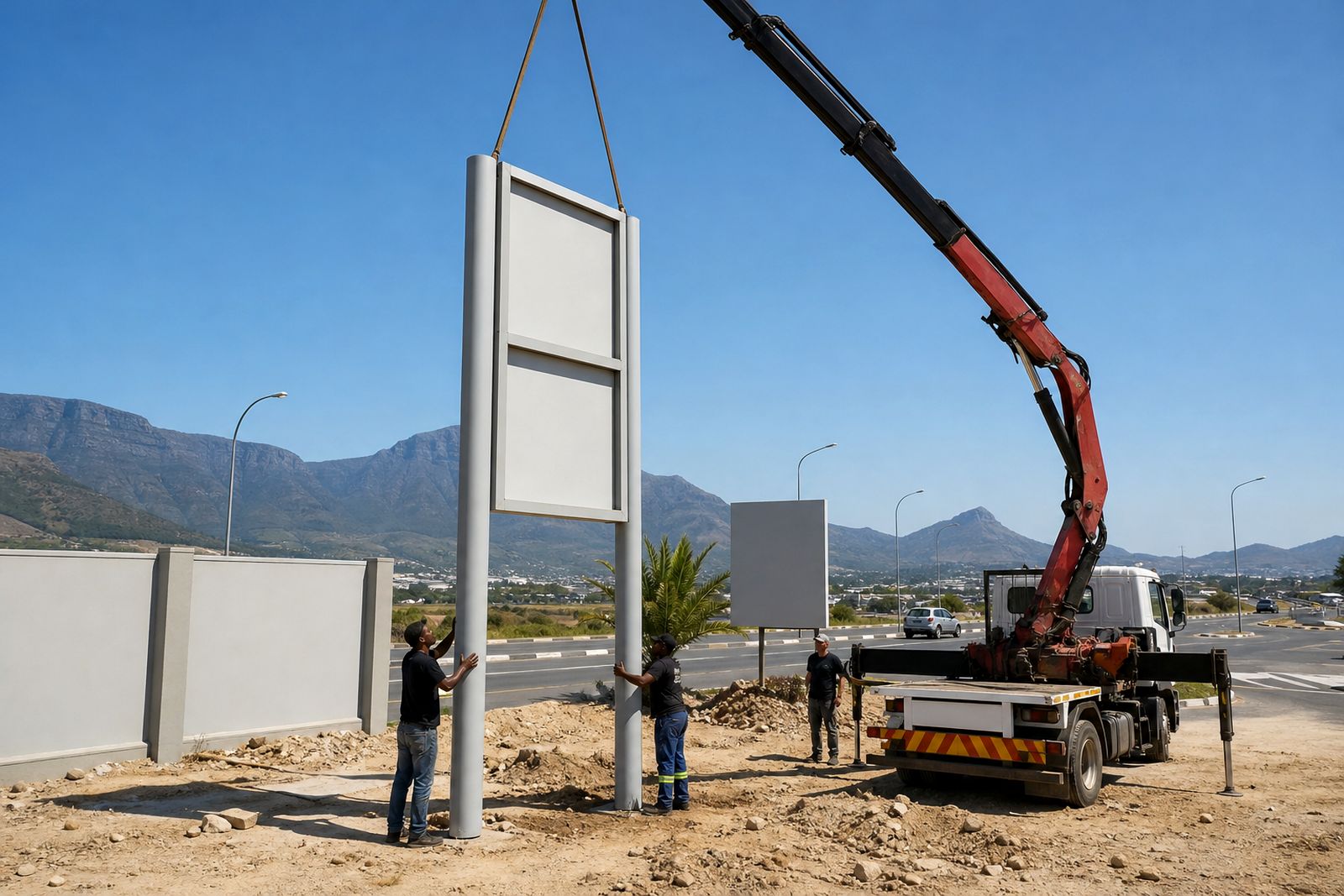
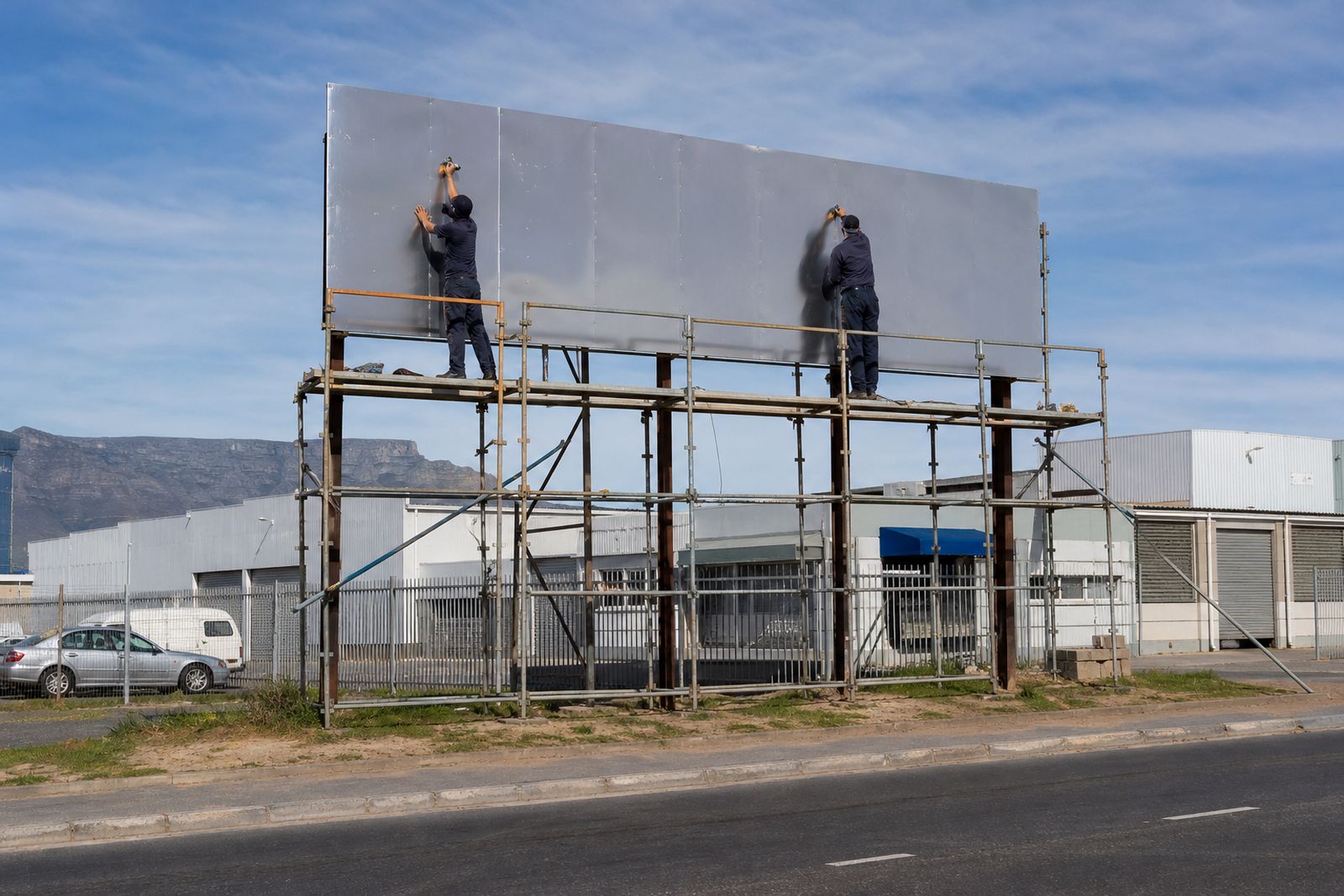
Very large illuminated faces need more internal support to prevent flexing and uneven glow. On exposed sites in Cape Town, wind loading becomes a real limit, so oversize signs may need a steel subframe, engineer input or a different sign type altogether. If a sign is too large for the fixing surface or if access for maintenance is poor, a pylon sign or billboard structure may be the better route.
Where light boxes suit, and where they do not
Light boxes suit businesses that need a clear name and message after dark without relying on external floodlights. They work well on shopping centres, forecourts, takeaway fronts, medical rooms, storage facilities, office parks and event points where visitors arrive early or leave after sunset.
- Good fit for: entrances, street-facing facades, covered walkways, reception exteriors, parking access points and building name signs.
- Useful when: the sign must be visible in winter rain, early mornings, power return periods after outages, or from moving traffic.
- Less suitable for: heritage facades with strict visual rules, very small interior feature signs, or temporary promotions better handled with banners or boards.
- Not ideal when: there is no reliable power point nearby, no safe access for servicing, or the landlord does not allow illuminated signage.
If your premises sit inside a body corporate complex or along a controlled route, municipal and property rules may limit sign projection, brightness or placement. We can advise on practical options, but site approval normally needs to be confirmed before manufacture starts.
Materials, lighting and build details
For coastal conditions around Cape Town, material choice matters. Aluminium frames are popular because they resist corrosion well, while steel sections are useful where extra strength is needed. Faces can be opal acrylic for an even glow, or solid panels with cut-out letters for a more focused lit effect. Graphics are matched to the intended reading distance and the amount of night use.
Internal lighting is generally LED based because it gives good brightness with lower running demand and less heat than older systems. Illumination is spaced to reduce hot spots and dark patches, and service access is planned from the front or side depending on the install position. Where a sign is exposed to driving rain, cable entry points and joins must be sealed properly. A neat install now saves trouble later.
For sites affected by power cuts, ask us about timer use, switching points and access to the electrical feed so the sign can be isolated safely when needed.
Installation, power and site requirements
Before fitting, we check the mounting surface, access equipment needs and cable route. Brick, block, steel frame cladding and concrete all need different fixings. A sign that looks simple on paper can become complicated if the wall is weak, the fascia is hollow, or the install point is above a busy pavement. In some centres and business parks, fitting times are restricted, so timing matters too.
- Power: a nearby power source and isolator are needed, installed by a qualified electrician where required.
- Structure: the wall or frame must be sound enough for the sign weight and wind load.
- Access: tell us if the sign is above a canopy, over stairs, or only reachable with lifting equipment.
- Permissions: landlord, body corporate or municipal approval may be needed for external illuminated signage.
- Height and exposure: signs on upper floors or open corners may need stronger brackets and thicker framing.
If the site is in a windy corridor or close to the sea, say so in your enquiry. Salt air and weather exposure can change the build spec quite a bit.
Care, lifespan and what to send with your enquiry
A light box should be cleaned with a soft cloth and mild non-abrasive cleaner to keep the face bright and readable. Avoid harsh solvents on acrylic faces and printed graphics. Periodic checks on fixings, seals and illumination are sensible, especially after winter storms. If a unit starts showing dim areas, flicker or water marks, it should be inspected before the problem spreads.
When you contact us through the enquiry form, send as much practical detail as you can. Clear information shortens quoting time and helps us suggest the right build first time round.
- Required sign size in millimetres, or at least the available wall area.
- Single-sided or double-sided requirement.
- Indoor, outdoor, sheltered or fully exposed location.
- Mounting height, wall type and notes on access.
- Mounting surface such as brick, steel, cladding or concrete.
- Approximate viewing distance and whether traffic or foot traffic must read it.
- Artwork files, logo, colours and wording needed.
- Any approval rules from the landlord, centre management or municipality.
If you already have existing signage to match, mention that too and we can check proportions and colours from your supplied files or written sizes.
What our Signage customers say
Verified Google reviews
Questions we get asked
Do illuminated light boxes need approval?
Often yes for external signs. Shopping centres, landlords, body corporates and some municipal areas may require approval for size, position, brightness or projection.
Can you make a light box to match our existing signs?
Yes, if you send artwork, measurements and the sizes and colours of the current signage. We can work to a matching layout and keep approved artwork on file for repeat orders.
Are illuminated signs suitable near the coast?
Yes, but the build must suit the conditions. Coastal humidity, salt air and wind can affect material choice, fixings and sealing, so it is best to mention the exact site when you enquire.
Also worth a look
Ask for a quote
Send the sign type, approximate size, quantity, site and timing through the contact form, and S Signs will reply with practical options and a quote.
Open the contact form