Corporate signs
Corporate signs give your premises a clear, consistent identity from reception to exterior entry points. We make and fit branded sign systems in practical materials for offices, shops, industrial sites and multi-tenant buildings around Cape Town.
What corporate signs are
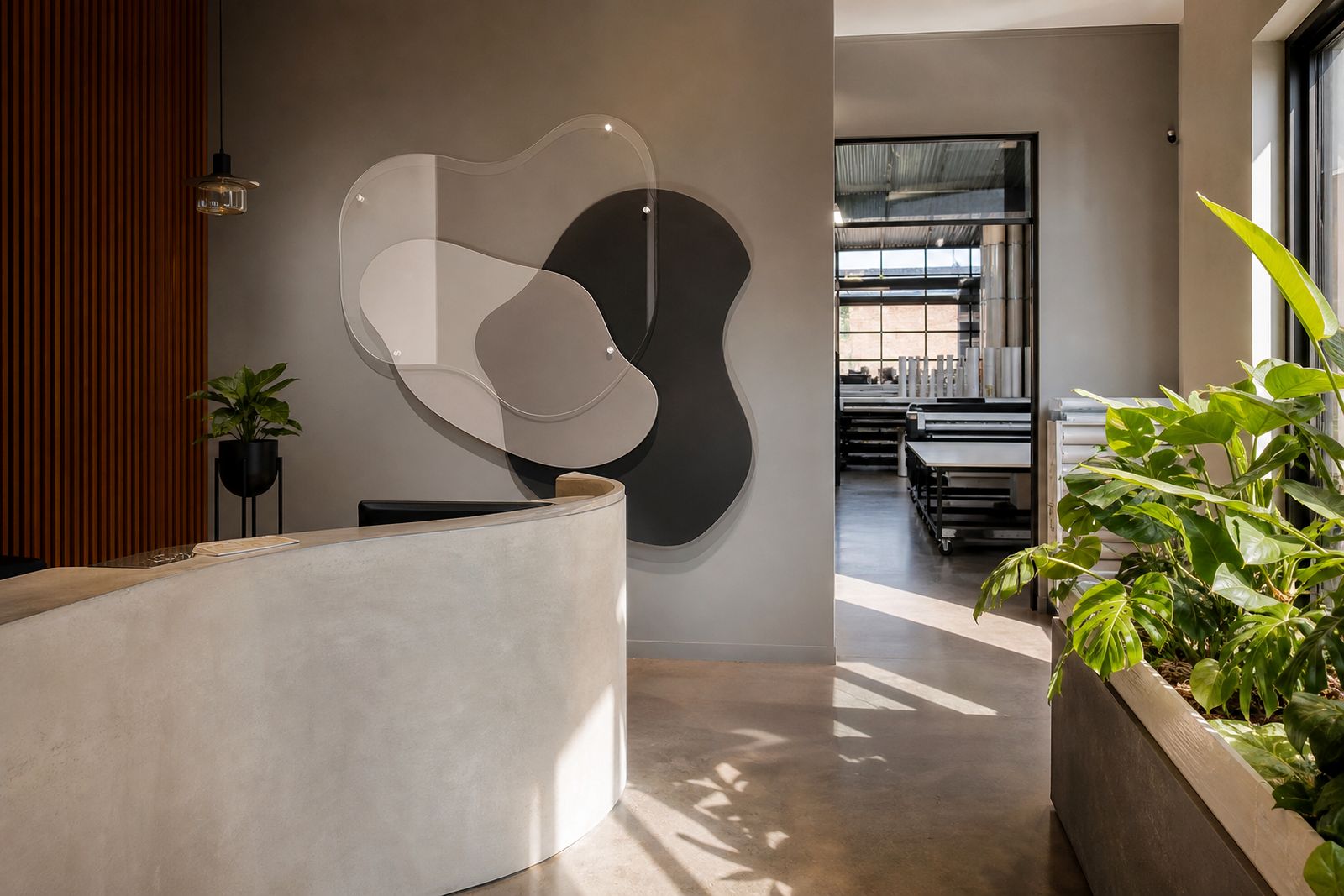
Corporate signs are branded identification signs used on business premises to show who occupies a site, where visitors must report, and how departments or tenants are arranged. They are commonly installed at reception areas, entrance walls, office park gateways, shared lobbies, parking areas and internal corridors. A good corporate sign system is less about decoration and more about clarity, consistent branding and a tidy professional finish.
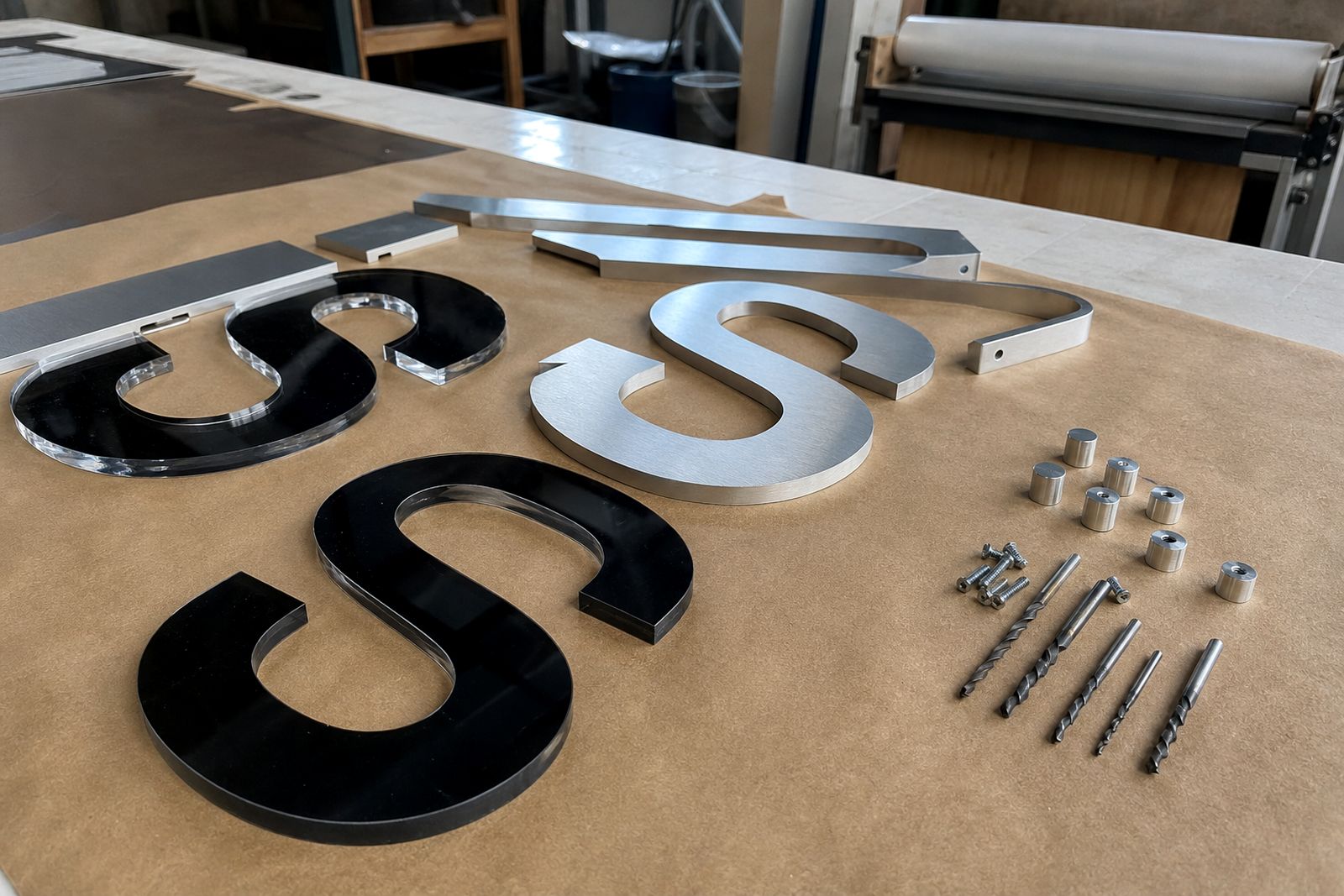
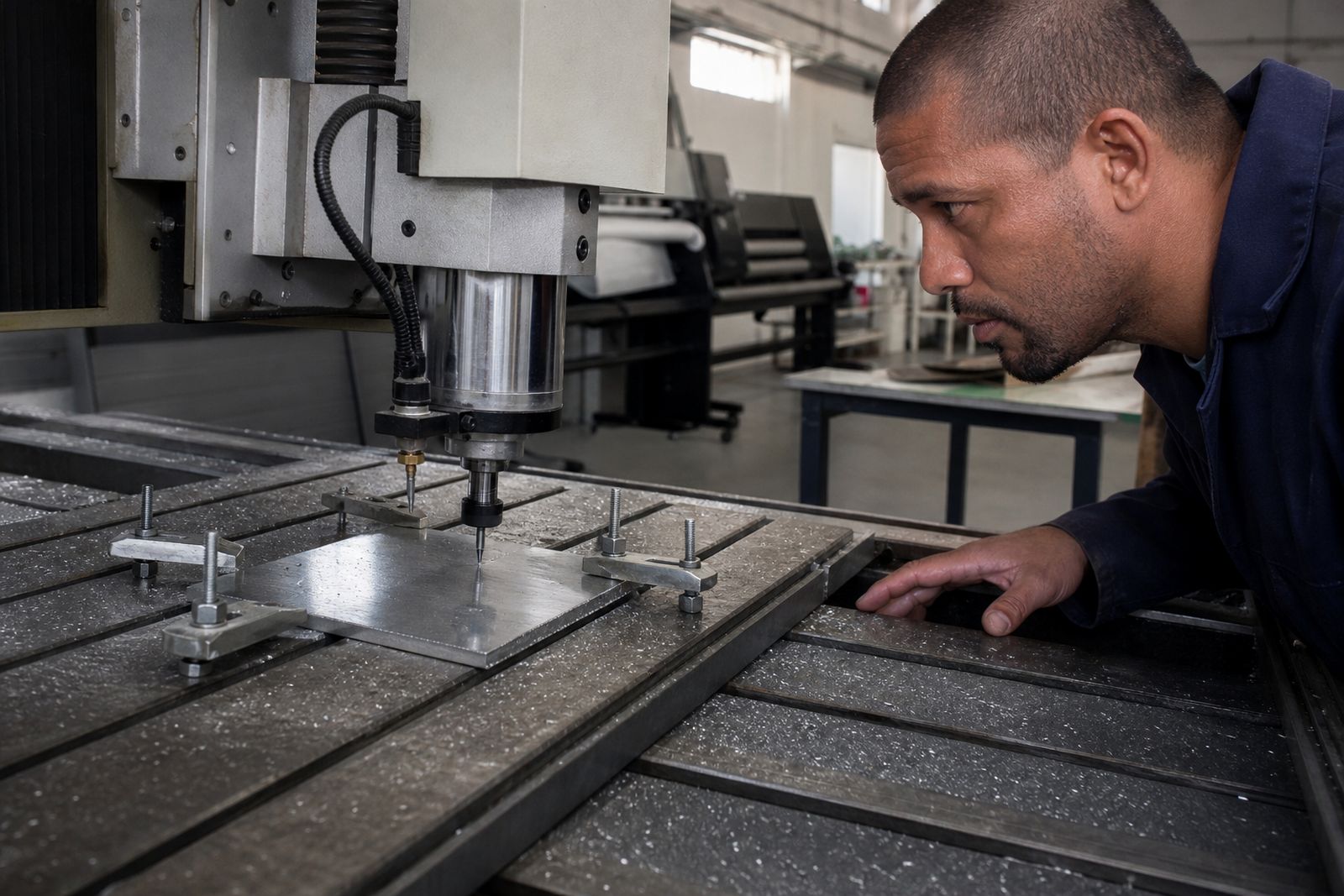
At our Cape Town workshop we produce corporate signs in combinations of aluminium, perspex, vinyl graphics and printed panels, depending on where the sign will sit and how long it needs to last. We can match new signs to existing branding, and we can keep approved artwork on file for repeat orders if your business rolls out the same format to different branches or units.
Materials, finishes and common formats
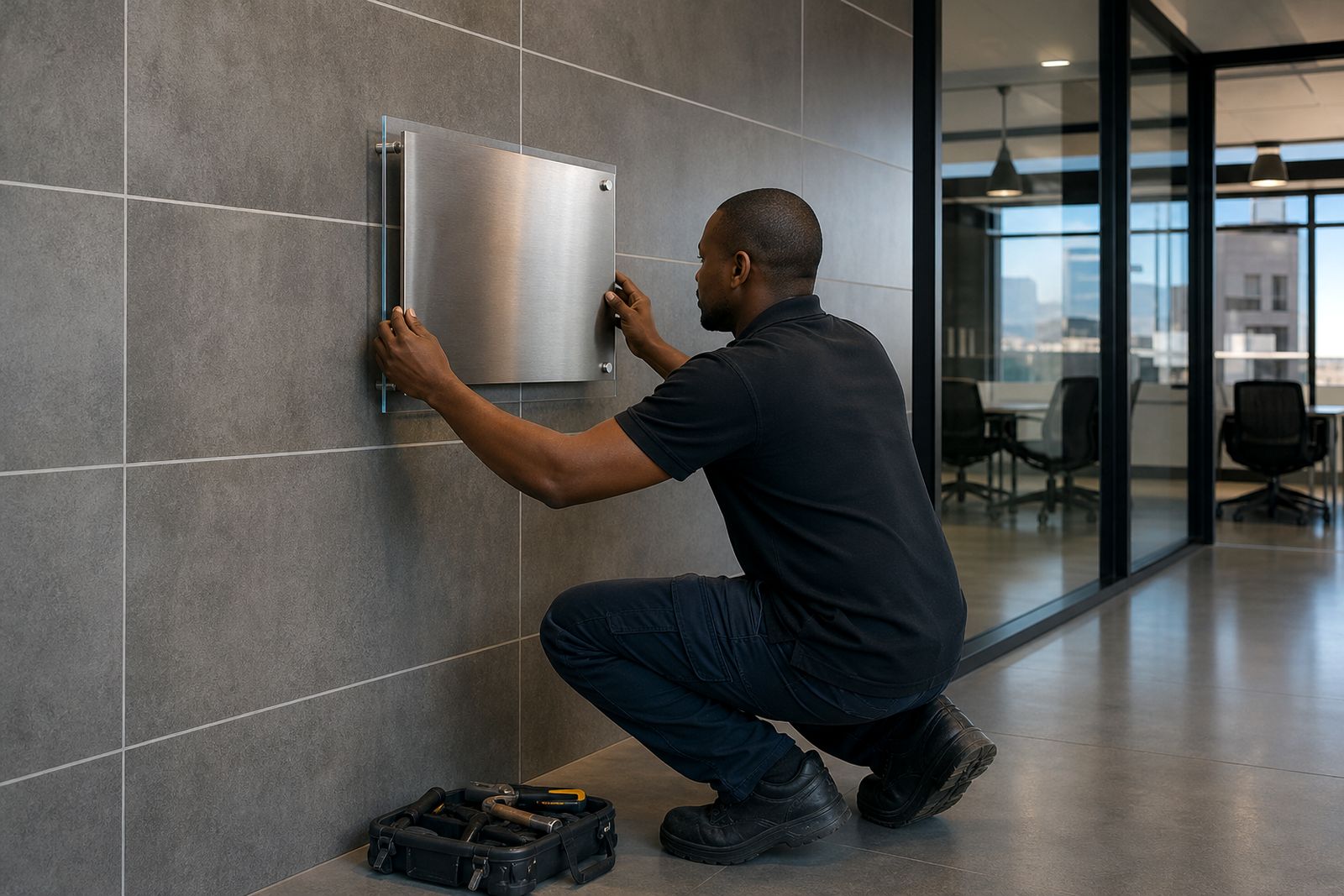
The right build depends on viewing distance, fixing surface, sun exposure and whether the sign is indoors or outside. For reception walls and office interiors, perspex panels with stand-off fixings are a common choice. For external branding, powder-coated aluminium trays, folded panels and cut-out letters generally cope better with weather and cleaning. Vinyl-applied logos and text are useful where branding may need updates later.
- Flat panel signs: aluminium composite or perspex panels for reception walls, passages and exterior entry points.
- Built-up or cut-out letters: fabricated or router-cut letters mounted proud of the wall for a cleaner corporate look.
- Directory systems: panel sets for office parks, business centres and shared buildings with multiple tenants.
- Post and panel signs: freestanding signs for entrances, parking guidance and wayfinding.
- Window-applied corporate branding: logos, trading hours and privacy bands in vinyl for offices and street-facing premises.
Finishes can be gloss, satin or matte depending on the material. Matte often reads better under office lighting, while exterior signs usually need stronger contrast to stay legible in bright Cape sun. In coastal areas, fixings and substrates must be chosen with salt air in mind or the sign can start showing wear sooner than expected.
Sizes, options and working limits
Corporate signs range from small reception plates to large entrance identifiers several metres wide. Indoor logo panels may start from around 400 mm wide, while external wall signs and gateway signs are often between 1.2 and 4 metres wide depending on sightline and building scale. Large formats are possible, but bigger is not always better if the wall face is uneven or the sign must clear doors, sprinklers or existing lighting.
There are practical limits on every material. Perspex gives a neat finish indoors, but oversized unsupported panels can flex if the span is too wide. Thin panels suit flat walls, though badly bowed or textured surfaces may need a framed solution instead. Cut-out letters read well from a distance, but very small fonts with thin strokes can be difficult to fabricate neatly. Exterior panels facing strong south-easter winds need proper fixing points and sometimes a heavier build than the same sign used in a sheltered courtyard.
- Small internal signs: suited to room names, directional plates and reception branding.
- Medium wall signs: suited to office entries, retail fronts and tenant identification.
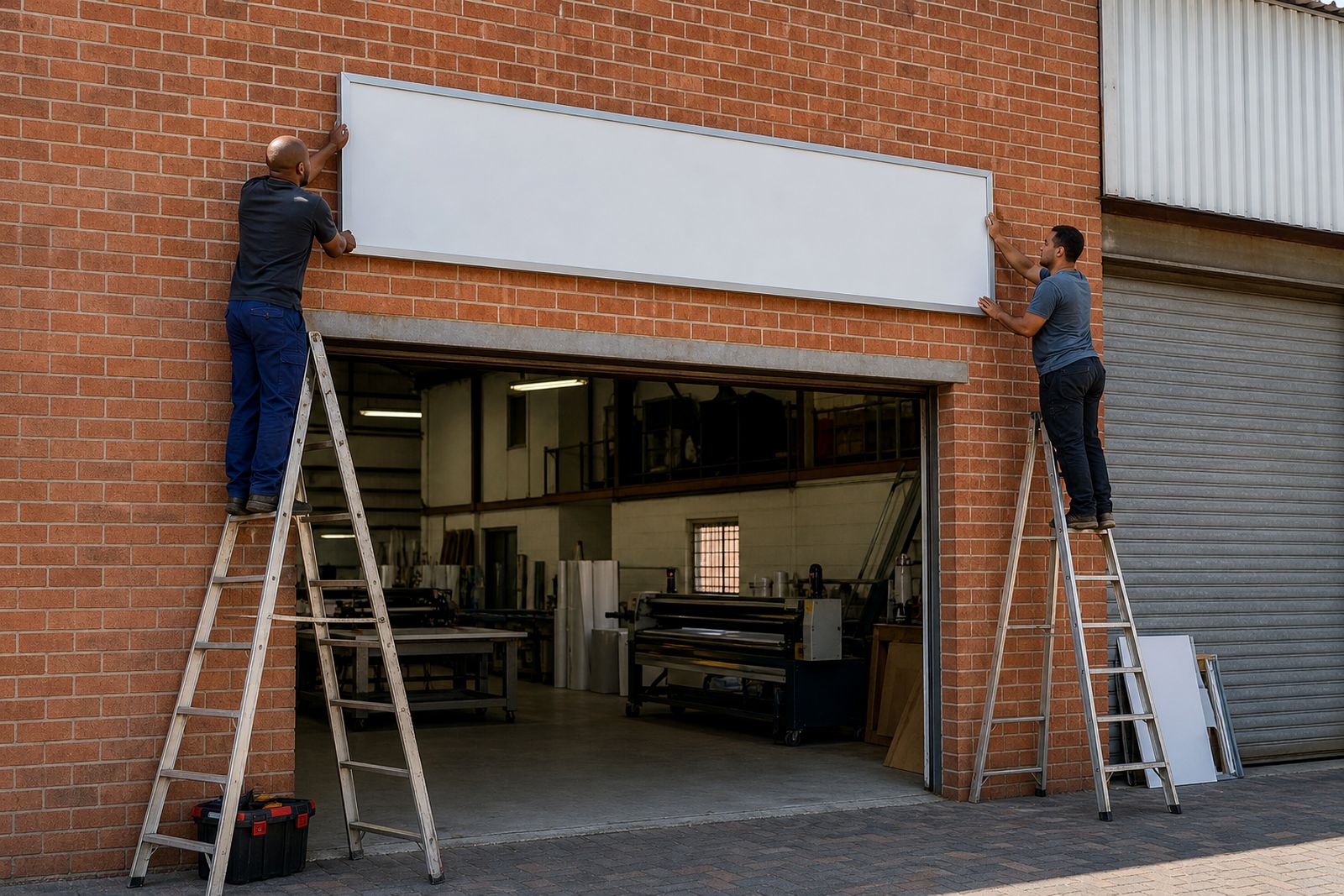
- Large external signs: suited to business parks, warehouses and roadside premises where visibility matters.
- Illumination: available on related sign types, but not every corporate sign needs lighting and some body corporate rules may restrict it.
If your site is in a sectional title complex, office park or managed centre, signage size and position may already be controlled by the landlord or management rules, so it helps to check that before production starts.
Where corporate signs work best, and where they do not
Corporate signs work best where visitors need confidence that they are in the right place. This includes shared office buildings, consulting rooms, industrial parks, training venues, schools, reception foyers and customer parking areas. They are also useful for businesses operating across several units where a single sign style can tie the site together.
They are less suitable where messaging changes every few days, where the wall surface is crumbling, or where the landlord does not allow permanent fixing. In those cases a temporary printed board, window branding or an A-frame may make more sense. Very dark, heavily textured cladding can also limit the effect of fine lettering, so the sign may need a solid backing panel for contrast. A lot of people ask for tiny logos from an existing letterhead and then want them read from the road, that usually needs a redraw and a larger format to work properly.
Installation and site requirements
Before fitting, we need to know the wall type, mounting height, access conditions and whether power or drilling restrictions apply. Brick, plaster, drywall, cladding, glazing and steel all require different fixing methods. For high-level signs we may need safe access equipment and a clear work area. Where fitting happens in active office environments, quieter install times can often be arranged to limit disruption.
- Wall condition: sound, dry surfaces give the best result for panels, letters and vinyl.
- Access: tell us if there are height limits, basement entries, boom gates or loading rules.
- Permissions: some centres and municipalities require approval for exterior signs, especially street-facing signs.
- Lighting and power cuts: if the sign links to existing lighting or powered elements, let us know so we can plan around site conditions.
Cape Town weather also matters for installation timing. Wind can delay fitting of larger external panels and rain affects some adhesive applications, so outdoor jobs may need a weather window. For reception signs, the wall type and a few measurements usually help us advise the cleanest layout before we print or fabricate.
Care, turnaround and what to send with your enquiry
Most corporate signs are low-maintenance. Wipe perspex and aluminium faces with a soft cloth and mild soapy water, and avoid abrasive cleaners that can scratch the finish or lift printed graphics. Exterior signs near busy roads or the coast may need more frequent cleaning because of dust, grime and salt residue. If a panel takes a knock or branding changes later, replacement faces can often be made without redoing the whole sign system.
Turnaround depends on material choice, artwork readiness, quantity and whether installation is included. Straightforward repeat orders are usually quicker because we can work from approved artwork already on file. New site branding with multiple signs takes longer as dimensions, fixing details and layouts must be checked properly first.
- Your logo and artwork in a print-ready vector file if available.
- The sign type needed, for example reception panel, entrance sign or directory board.
- Approximate size, wall type and mounting height.
- Whether the sign is for indoor or outdoor use.
- The suburb or town in Cape Town or the wider Western Cape where it must be fitted.
- Any landlord, body corporate or municipal approval requirements.
Send those details through the enquiry form on our contact page and we can advise the suitable build, layout approach and installation method.
What our Signage customers say
Verified Google reviews
Questions we get asked
Can you match our existing branding across more than one site?
Yes. If you have approved artwork and brand colours, we can produce matching corporate signs for multiple premises and keep the artwork on file for repeat orders.
Do corporate signs need municipal or landlord approval?
Sometimes. Exterior signs in office parks, sectional title sites or street-facing positions may need landlord, body corporate or municipal approval before installation.
What if we do not know the exact size yet?
Send the wall width and type if you have them, the mounting height and the suburb. We can suggest a practical size range and advise what will read well from the intended viewing distance.
Also worth a look
Ask for a quote
Send the sign type, approximate size, quantity, site and timing through the contact form, and S Signs will reply with practical options and a quote.
Open the contact form