
Wall mounted signs
Wall mounted signs are built to fix directly onto interior or exterior walls where clear identification is needed every day. We make and fit practical wall signs in Cape Town for shops, offices, complexes, receptions and industrial sites.
What wall mounted signs are
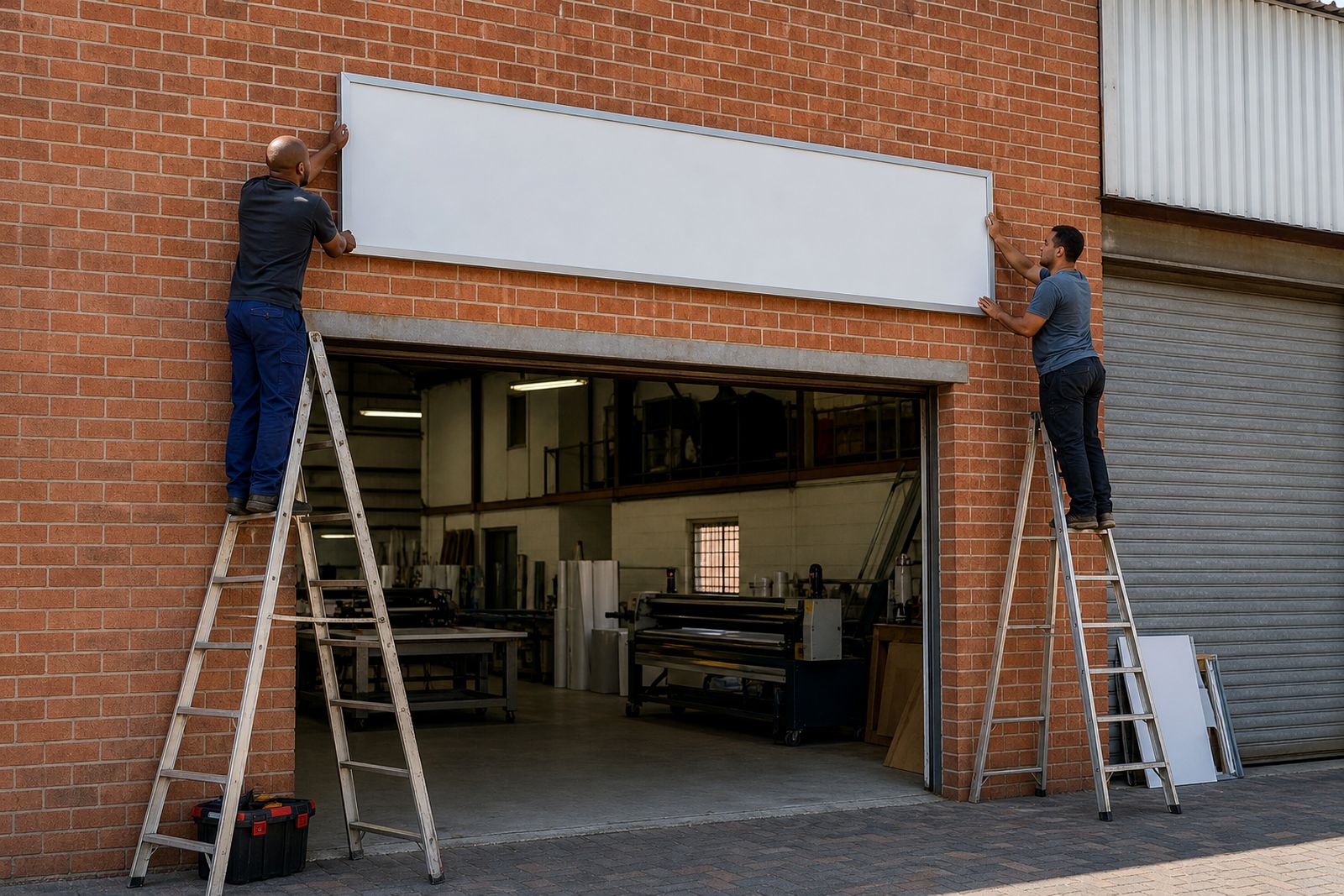
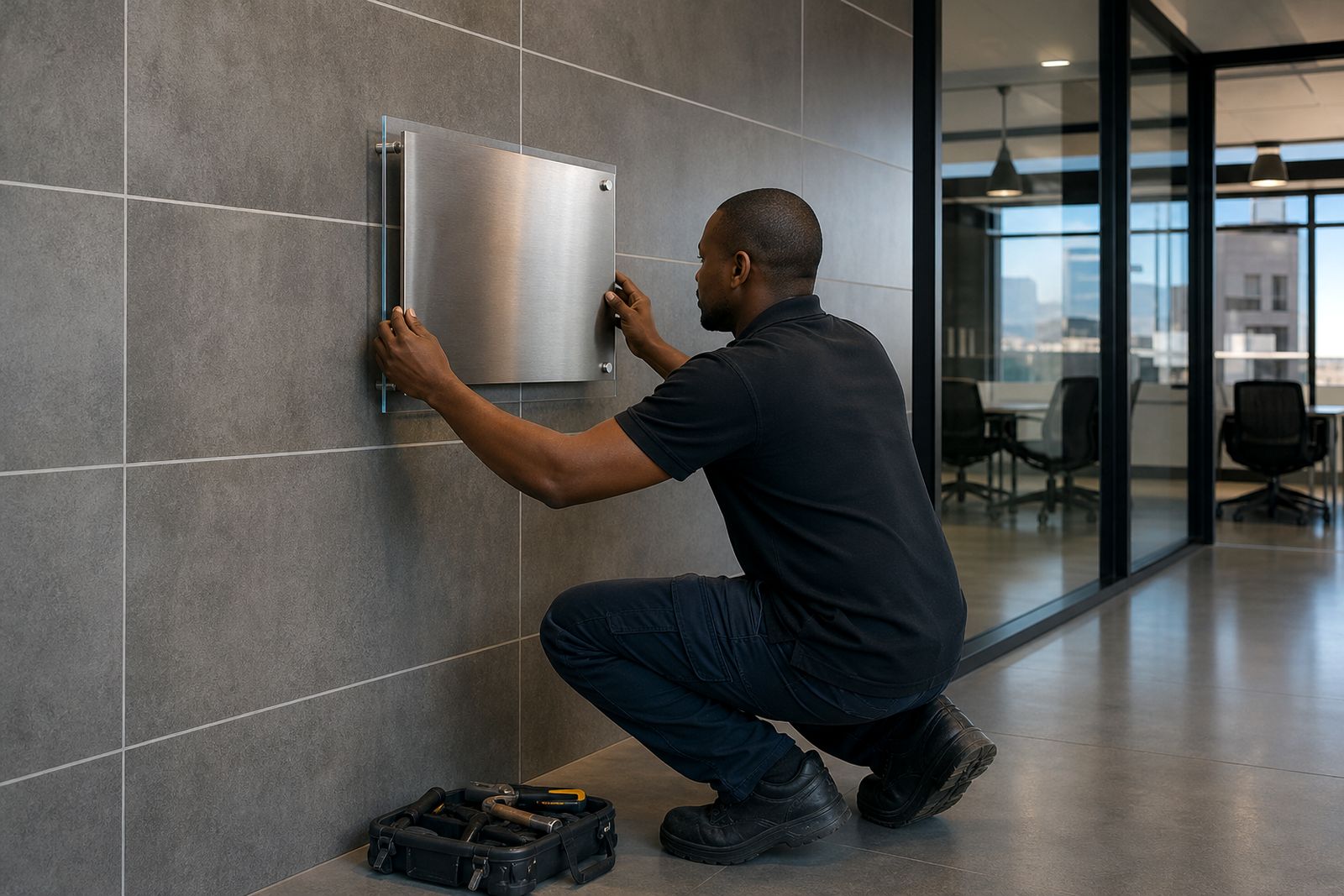
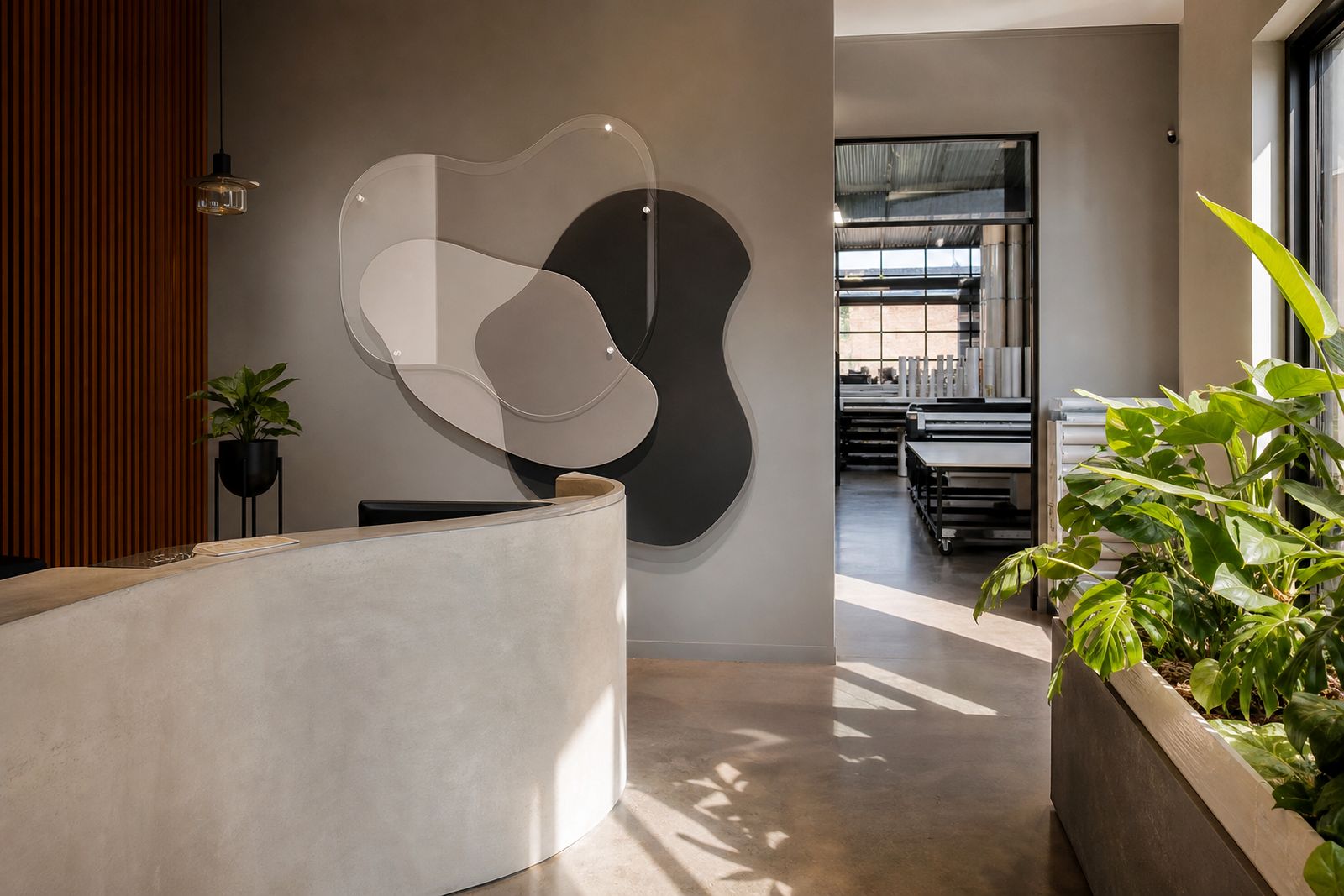
Wall mounted signs are face panels, fabricated letters or built-up sign units fixed to an existing wall surface. They are used where a business needs a permanent name sign, directional panel, reception sign or branded marker that sits flat against the wall or stands off on locators.
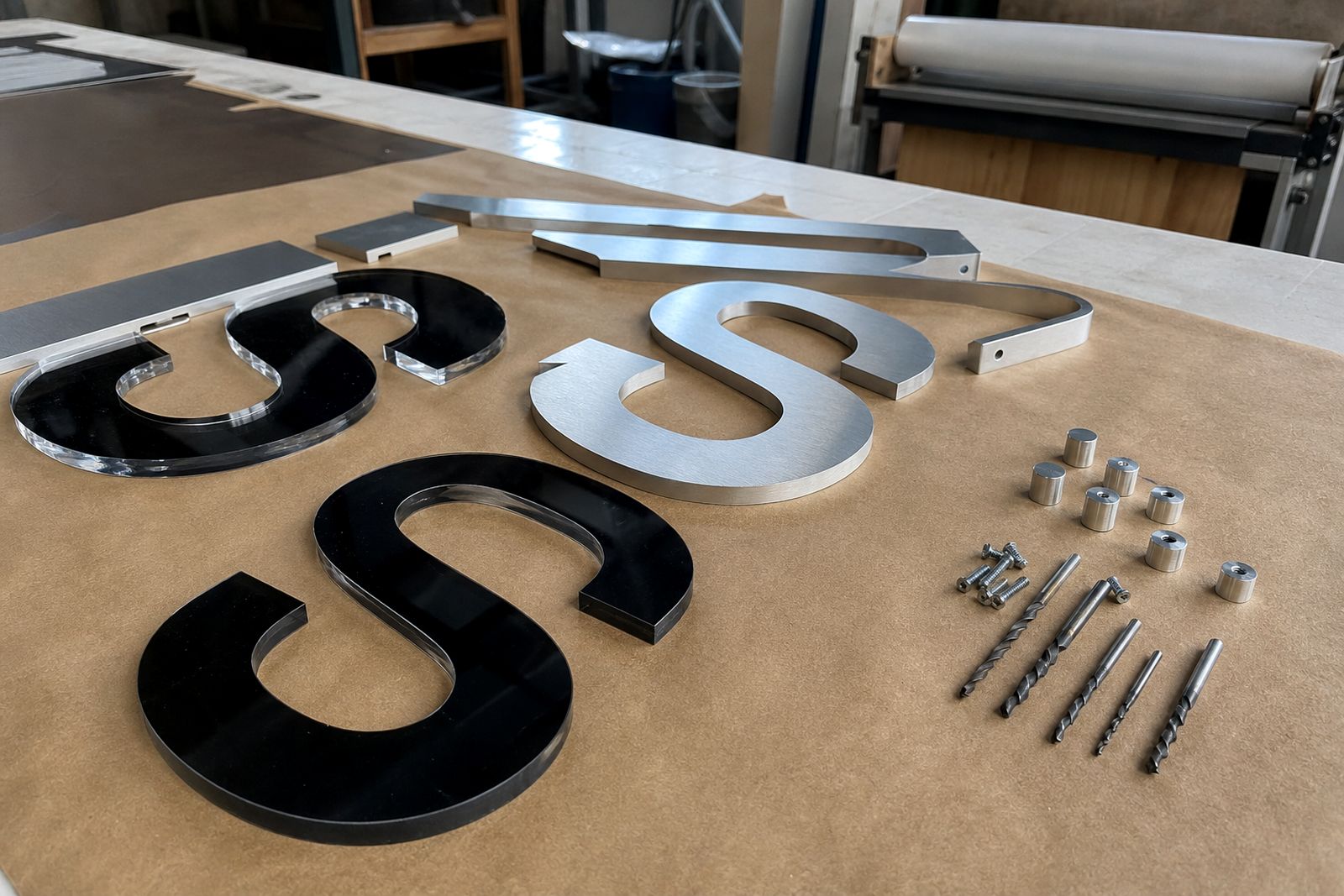
At our Cape Town workshop we produce wall signs in practical materials chosen for the job, including perspex, aluminium composite, powder-coated metal, vinyl-applied panels and illuminated units where required. The right choice depends on viewing distance, weather exposure, the wall condition and whether the sign is for short term promotion or long term identification. For repeat branches or site roll-outs, artwork can be kept on file so matching signs are easier to order later.
Materials, sizes and working limits
There is no single standard size for a wall mounted sign because the best result depends on the wall area and reading distance. Small reception panels may start around 400 x 300 mm, while exterior building name boards often run from 1 200 mm wide upward. Larger signs may be made in joined sections for handling, transport and secure fixing.
Material thickness and span matter. Very thin panels can flex on uneven plaster or in strong coastal wind, while oversized single sheets can be awkward to lift and align. Where needed we fabricate frames, stiffeners or spacer mounts to keep the sign straight and neat. On exposed walls close to the sea, salt air and sun need to be taken into account from the start.
- Perspex panels and letters for reception areas, office walls and covered entrances.
- Aluminium composite panels for outdoor use where a flat, durable face is needed.
- Metal trays or framed panels for larger building signs.
- Cut vinyl or digitally printed graphics with lamination or UV coating where suitable.
- Stand-off mounted lettering for a cleaner corporate finish.
Working limits are usually set by wall strength, access and wind exposure rather than print size alone. Very rough bagged walls, cracked plaster, loose cladding or unstable parapets may need preparation before fitting can start.
Where wall mounted signs suit best
These signs suit businesses that need fixed, visible identification without using a freestanding structure. They work well on shopfront side walls, reception areas, passages, factory entrances, unit numbers, school buildings, medical rooms and property management sites. If the message must stay in place for months or years, wall mounting is usually the practical option.
They do not suit every situation. If the sign needs to move often, if the landlord does not allow wall drilling, or if the wall finish is temporary cladding, another sign type may be better. For very high roadside visibility from a distance, a pylon or billboard format may be more effective than a wall sign.
- Good for office names, reception branding and directional panels.
- Good for warehouses, workshops and retail side elevations.
- Useful where floor space is limited.
- Less suitable for short event use or walls that cannot be drilled.
- Less suitable where trees, awnings or parked vehicles block the view.
Site and installation requirements
Proper fitting starts with the wall itself. We need to know whether the surface is plaster, brick, concrete, drywall, cladding, steel sheeting or another material. This affects the anchors, stand-offs and layout method used on site. Exterior signs also need a check on wind exposure, sun direction and whether there is enough safe access for ladders, scaffold or a lift.
On sectional title properties, business parks and municipal-facing sites, sign size and placement may be controlled by body corporate or local rules. It helps if you check approvals before manufacture begins. If electrical illumination is involved, the sign position must also suit power supply routing and safe isolation during power cuts.
- The wall type and the space around the sign.
- Approximate wall measurements in millimetres or metres.
- Mounting height from ground level.
- Access limits such as basements, narrow passages or busy forecourts.
- Whether drilling into the wall is allowed.
- If old signage must be removed and holes made good.
Most installs are straightforward, but uneven walls can slow alignment and sometimes existing paint pulls away when old signs are removed, so a little touch-up work is often needed after fitting.
Care and service life
Wall mounted signs last best when the material matches the environment. Indoor signs need only light cleaning and basic care. Exterior signs need more attention, especially in Cape Town where strong sun, winter rain and coastal humidity can age cheaper materials quickly.
For routine cleaning use a soft cloth, water and a mild non-abrasive cleaner. Avoid thinners, aggressive solvents and rough pads on printed faces, vinyl and perspex. Check fixings from time to time on signs mounted high on windy elevations. If a panel comes loose, it should be secured promptly rather than patched with tape or silicone.
Where the artwork is likely to be reused for additional branches, parking signs or internal wayfinding, we can keep the approved layout on file for repeat orders. That saves time and helps keep branding consistent across sites.
What to send when you ask for a quote
To quote accurately we need the practical details, not just the wording on the sign. A good enquiry lets us advise on size, material and fitting method before anything is made. If you already have artwork, send the best available file along with the wall size and type. If not, a marked-up PDF or even a clear reference image helps us understand the layout.
Please use the enquiry form on our contact page and include as much of the following as you can. If timing matters for a shop opening, handover or event, say so early as access bookings and site checks can affect turnaround.
- Town or area in Cape Town or the nearby Western Cape.
- Indoor or outdoor use.
- Approximate finished size.
- Material preference if you have one.
- Printed panel, cut letters or illuminated sign.
- Wall type and the size of any existing sign.
- Required installation date and access times.
- Any landlord, body corporate or site rules.
What our Signage customers say
Verified Google reviews
Questions we get asked
Can wall mounted signs go onto any wall?
Most walls can take signage, but the fixing method changes with plaster, brick, concrete, drywall or cladding. We need the wall type and basic measurements first to confirm what will work.
Do you install signs outside Cape Town?
We cover Cape Town and nearby parts of the Western Cape. When you enquire, include the suburb or town so we can confirm site access and installation scope.
What if I need the same sign for more than one branch?
We can keep approved artwork on file for repeat orders, which helps with matching sizes, colours and layouts across different sites.
Also worth a look
Ask for a quote
Send the sign type, approximate size, quantity, site and timing through the contact form, and S Signs will reply with practical options and a quote.
Open the contact form