

Plaques and directory signs
Plaques and directory signs help people find the right office, floor, reception area or tenant without confusion. We make practical sign systems for shared buildings, business parks and internal office routes across Cape Town and nearby Western Cape areas.

What plaques and directory signs are used for
Plaques and directory signs are fixed information signs used to identify rooms, entrances, departments, tenants and wayfinding points in a building. They are common at office blocks, medical rooms, schools, warehouses, retail centres and mixed use sites where visitors need a clear route from the gate or foyer to the correct unit.
We produce single plaques for doors and walls, multi panel directories for foyers, and matching sign sets for corridors, stairwells and external walkways. The aim is simple: names and directions must be easy to read at a glance, with materials that suit the site conditions and do not look out of place after a few months of sun or coastal air.
- Reception plaques and welcome signs
- Tenant directories for entrances and lobbies
- Room identification and office name plates
- Toilet, access and directional signs
- Parking, delivery and service area markers
Materials, sizes and working limits
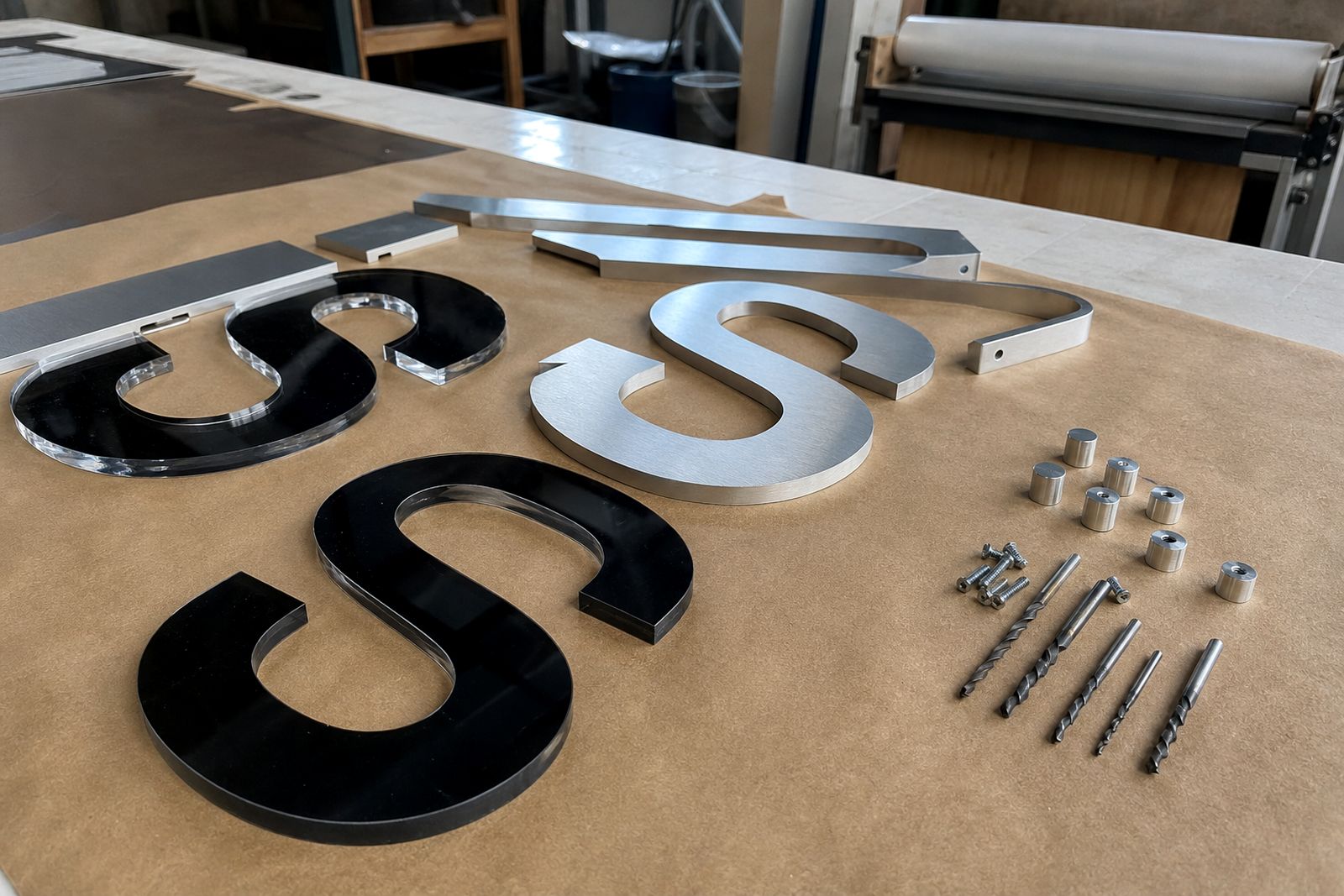
For most plaque work we use engraved laminate, perspex, aluminium composite, aluminium plate or vinyl applied to a rigid panel. The best choice depends on where the sign will sit, how often tenant names may change, and whether the sign needs a polished corporate finish or a harder wearing utility finish.
Small door plaques often start from around 150 x 50 mm and 200 x 100 mm. Room and directional plaques are commonly made from 300 x 100 mm up to 600 x 200 mm. Foyer directories usually range from 600 x 900 mm to 1 200 x 2 400 mm depending on viewing distance and the number of listings. If text is too small for the reading distance, the board becomes useless, so we will flag this before production.
- Engraved laminate suits indoor room labels and utility signs, but long direct sun can shorten colour life.
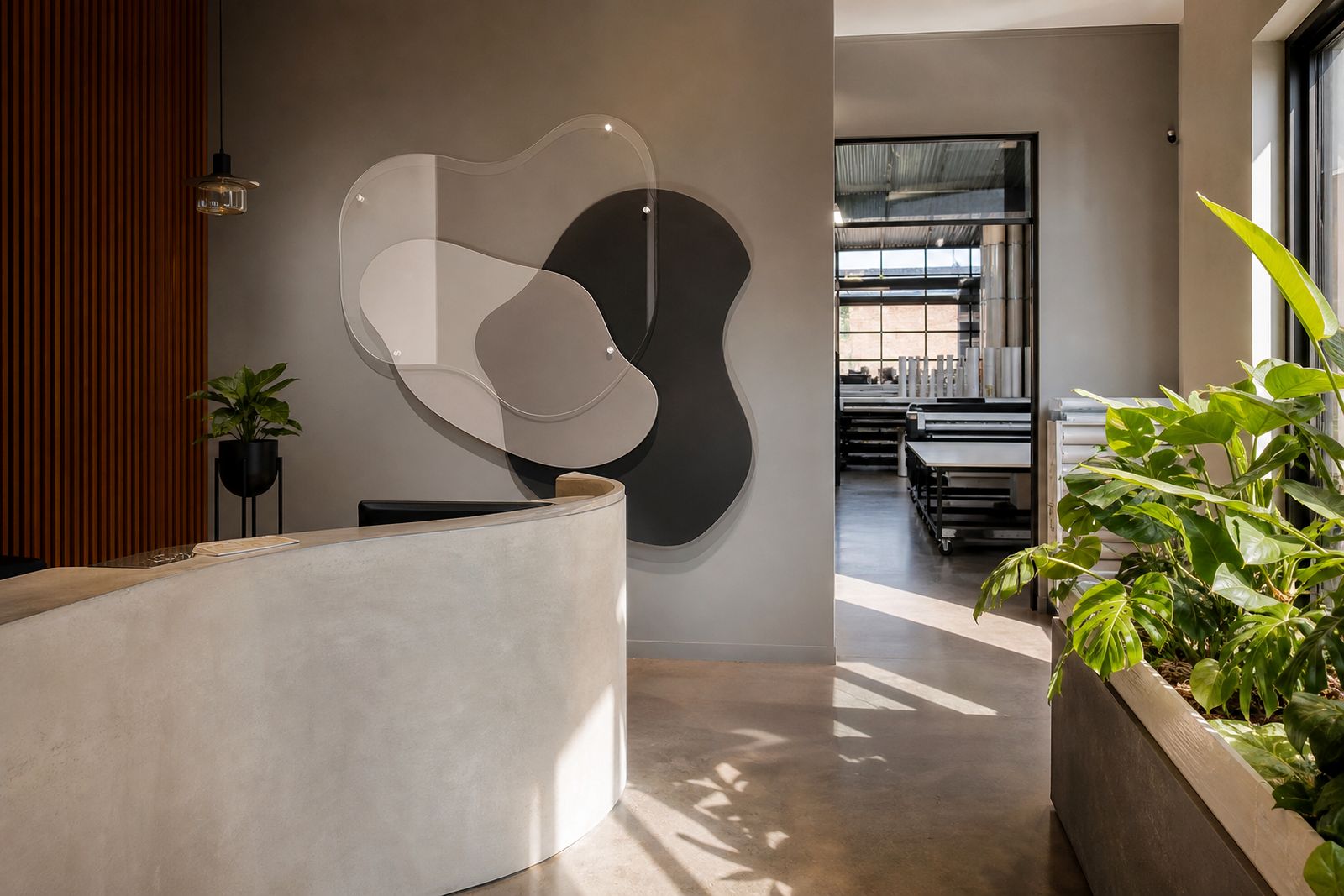
- Perspex gives a neat office finish and can be face mounted with stand-off fixings, but it must be fixed on a reasonably flat surface.
- Aluminium based panels suit outdoor use better and handle Cape Town weather more reliably.
- Vinyl graphics work well for changeable names on directory panels, though they are not ideal where surfaces are rough or heavily textured.
Very long lists on one board may need larger overall sizes, split columns or separate stacked panels. Where names change often, modular strips or replaceable panels are usually the more practical route and save time later.
Where these signs suit and where they do not
Plaques and directories suit buildings where visitors need guidance without asking at every turn. They work well in reception areas, passageways, lift lobbies, business parks, sectional title offices, schools, clinics and industrial sites with multiple units. Outdoor directories also help at entrances where a site has more than one tenant or access point.
They are less suitable where the information changes every week, where the wall surface is crumbling, or where people need to read from a moving vehicle at distance. In those cases a larger format sign, pylon or separate directional board is often the better option. For temporary events, printed boards or banners may also be more practical than a fabricated plaque set.
In high humidity areas closer to the coast we normally steer clients toward materials and fixings that cope better with moisture and salt in the air. For shaded interior passages there is more freedom on finish, but glare from glass walls and spotlights still matters a bit.
Installation and site requirements
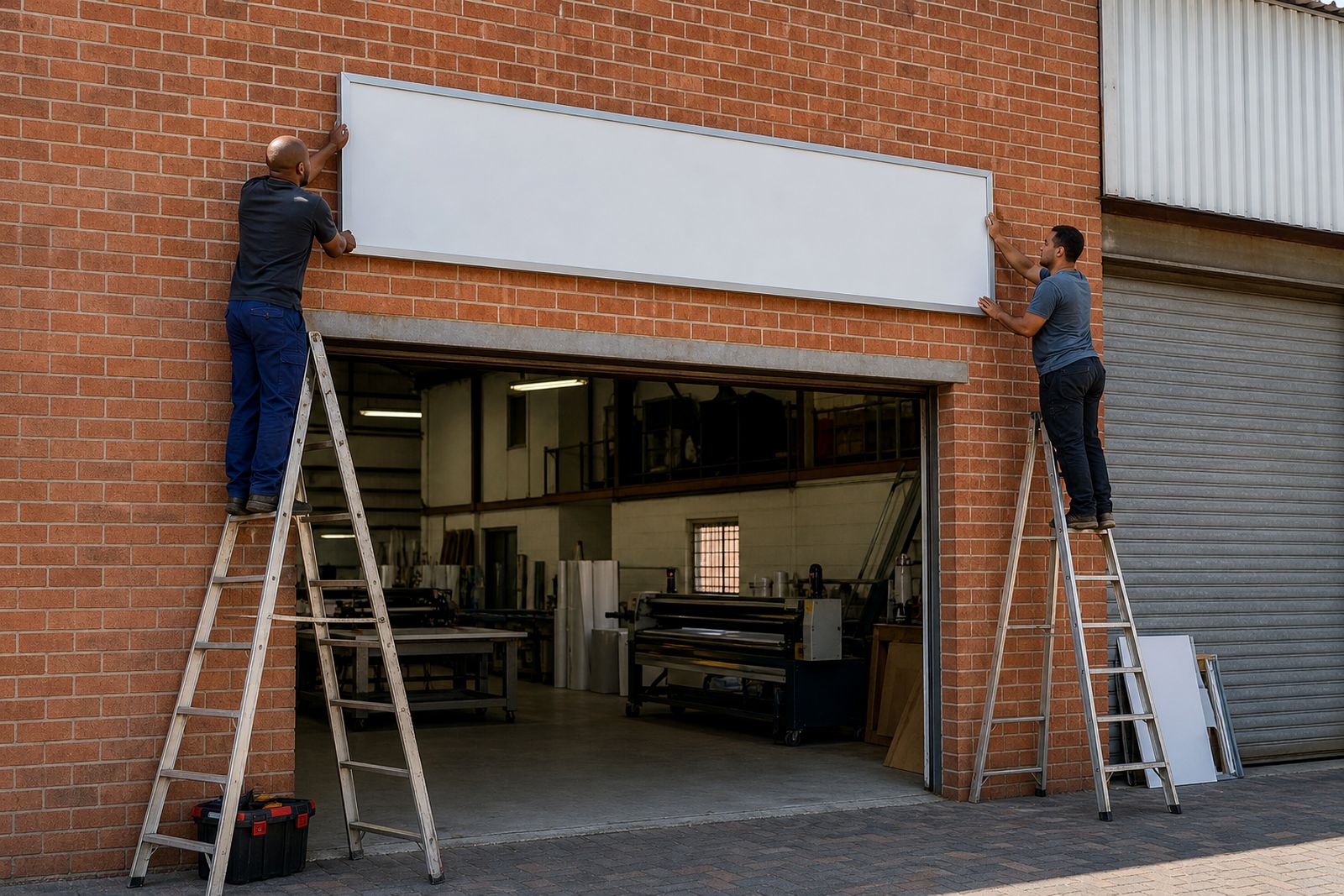
Good installation starts with the site details. We need to know what surface the sign is fixing to, whether the area is indoors or outside, and whether there are body corporate or municipal rules about placement, projection or drilling. In shared buildings we also check access times, parking for the fitting vehicle and whether work must happen before tenants arrive.
Wall mounted plaques are usually fixed with screws and caps, stand-off studs or a suitable adhesive system, depending on the substrate and sign weight. Directories must be level, readable and placed where people naturally stop. For exterior signs, wind exposure and water run-off matter, especially on upper floors and exposed entrances.
- Tell us if the wall is plaster, brick, glass, steel, cladding or painted board.
- Let us know if there are existing holes or old signs to cover.
- Share any rules for shopping centres, office parks or sectional title blocks.
- For tenant directories, send the final name list in reading order to avoid delays.
If a site has frequent power cuts, printed and fabricated wayfinding becomes even more important because people cannot always rely on lit screens or access systems to guide them.
Care and expected upkeep
Most plaques and directory signs are low maintenance if they are cleaned correctly. A soft cloth with mild soapy water is usually enough for acrylic faces, engraved plaques and aluminium based panels. Harsh solvents, abrasive pads and scraper blades can mark the face or lift graphics at the edges.
Outdoor signs should be checked now and then for loose fixings, especially after winter wind and driving rain. If a tenant panel changes, we can often replace only the relevant strip or face instead of remaking the full unit. Where repeat orders are likely, artwork can be kept on file so matching additions are simpler later.
- Clean gently and avoid strong chemical cleaners.
- Do not pressure wash close to panel edges or vinyl joints.
- Report lifting corners, cracked faces or loose studs early.
- Update directories as soon as occupancy changes so the board stays useful.
What to send when you ask for a quote
The best way to price a plaque or directory sign properly is with clear information up front. Send the sign type you need, the quantity, the approximate size and whether it is for indoor or outdoor use. If there is existing artwork or a logo file, include that too.
For building directories, list all tenant names exactly as they must appear and note if any names are likely to change soon. If you already know the preferred fixing method or finish, say so. If not, we can recommend a practical option once we see the site details and reading distance.
- Quantity and approximate sizes
- Material preference if known
- Indoor or outdoor location
- Wall or panel surface details
- Wall type and mounting height
- Required wording, logos and arrows
- Needed-by timing and access restrictions
Use the enquiry form on our contact page and we will come back with the best route for production and fitting.
What our Signage customers say
Verified Google reviews
Questions we get asked
Can you make a directory sign where tenant names change from time to time?
Yes. We can suggest layouts with replaceable name strips or separate panels so updates are simpler and more cost effective than remaking the full board.
Are plaque signs suitable for outdoor use near the coast?
They can be, if the right material and fixings are used. For exposed outdoor areas in the Western Cape we normally recommend more weather resistant panel options and suitable mounting hardware.
Do you install plaques and directories on site?
Yes, we can produce and fit signs in Cape Town and nearby Western Cape areas, subject to site access, wall condition and any building rules.
Also worth a look

Ask for a quote
Send the sign type, approximate size, quantity, site and timing through the contact form, and S Signs will reply with practical options and a quote.
Open the contact form